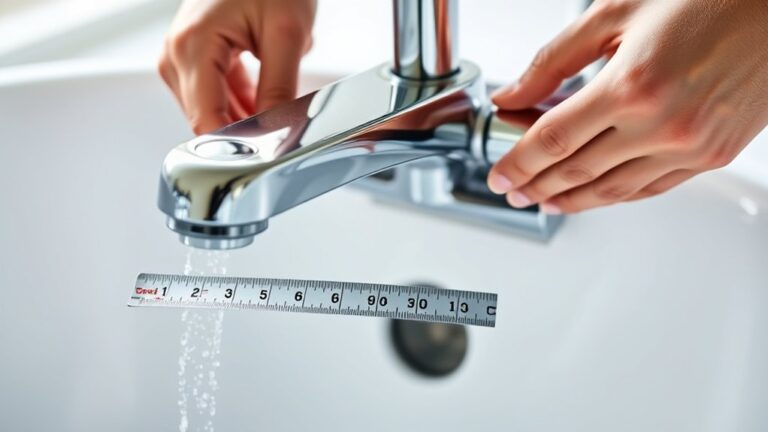
Tag: measuring faucet

  • How to Measure Bathtub Faucet

    How to Measure Bathtub Faucet

    Measuring a bathtub faucet is an essential step to ensure a perfect fit and avoid leaks or mismatches. Whether your faucet is wall-mounted or deck-mounted, accurate measurements are crucial for a successful installation.

    You’ll need to gather the right tools to capture every critical dimension—from mounting hole spacing to pipe diameters. Taking precise measurements upfront saves time and prevents costly errors.

    Getting it right requires a methodical approach you can’t afford to overlook. Carefully identifying the type of faucet and measuring each component will help you solve this puzzle efficiently.

    Key Takeaways

    • Identify if the faucet is wall-mounted or deck-mounted by checking handle placement and base attachment.
    • Measure the distance between mounting hole centers accurately using a tape measure in millimeters or inches.
    • Use a caliper to measure pipe diameters, spout height, and detailed fitting dimensions for precise compatibility.
    • Double-check all measurements immediately to avoid errors and ensure proper fit with replacement parts.
    • Verify measurements against manufacturer specifications and existing plumbing setup for functional and aesthetic compatibility.

    Identify Your Bathtub Faucet Type (Wall-Mount vs. Deck-Mount)

    wall vs deck faucet identification

    How do you determine whether your bathtub faucet is wall-mounted or deck-mounted? Start by identifying faucet handles: if they extend directly from the wall above the tub, it’s wall-mounted. Conversely, if the handles and spout are attached to the tub’s rim or a horizontal surface around the tub, it’s deck-mounted.

    Next, locate mounting screws; wall-mounted faucets typically have screws concealed behind escutcheon plates fixed to the wall, while deck-mounted faucets show screws on or beneath the deck surface. Check for piping visible inside the wall cavity or beneath the tub deck, which also helps confirm the type.

    Being precise in identifying faucet handles and locating mounting screws ensures you correctly classify your faucet before measuring or replacing it.

    Gather the Right Tools to Measure Your Bathtub Faucet

    Where do you begin when preparing to measure your bathtub faucet accurately? First, gather the right tools to ensure precise measurements that respect both functionality and bathroom aesthetics.

    1. Tape Measure Use a reliable tape measure to capture exact dimensions of spout length and base diameter.
    2. Caliper Employ a caliper for detailed measurements of small parts, crucial when matching faucet finishes.
    3. Level Confirm the faucet alignment to avoid installation errors affecting water flow and appearance.
    4. Notebook and Pen Record all measurements clearly, noting any irregularities or design details impacting replacement or upgrade options.

    These tools guarantee you capture all critical data, preserving your bathroom’s aesthetic integrity while facilitating a smooth faucet fitting process.

    Confirm Bathtub Faucet Wall or Deck Mount Type

    identifying faucet mounting type accurately

    Determining whether your bathtub faucet is wall-mounted or deck-mounted is essential before taking any measurements. Start by visually inspecting the faucet’s base: if it attaches directly to the bathtub rim or deck surface, it’s deck-mounted. If it extends from the vertical wall above the tub, it’s wall-mounted.

    Confirming this prevents conflicting measurements that can arise from mixing dimensions of both types. Wall and deck mounts require different measurement approaches and hardware specifications.

    Using mismatched hardware from one type on the other can cause installation issues and leaks. Accurate identification ensures you measure mounting hole distances and other dimensions correctly, avoiding costly errors.

    Take note of the faucet’s position relative to the tub to streamline your measurement process and maintain compatibility with replacement parts.

    Measure Bathtub Faucet Mounting Hole Distance

    Why is measuring the mounting hole distance essential for your bathtub faucet replacement? Accurate measurement ensures measurement accuracy and part compatibility, preventing installation issues.

    To measure the mounting hole distance, follow these steps precisely:

    1. Use a reliable tape measure or caliper to gauge the distance between the centers of the existing mounting holes.
    2. Record the measurement in millimeters or inches for precision.
    3. Double-check the measurement to confirm accuracy and avoid costly errors.
    4. Compare the measured distance with the specifications of the new faucet to verify part compatibility.

    Focusing on these technical details guarantees your replacement faucet fits seamlessly, maintaining structural integrity and functionality without requiring modifications or repairs.

    Check the Diameter of Bathtub Faucet Pipes and Connections

    measure faucet pipe diameters and fittings

    How do you ensure your new bathtub faucet will connect properly to your existing plumbing? Start with a diameter check of the faucet pipes and pipe connections. Use a caliper or a ruler to measure the outer diameter of the supply pipes carefully.

    Note whether the pipes are copper, PVC, or galvanized steel, as material affects connection types. Verify the diameter of threaded pipe connections or fittings to match the new faucet’s inlet size. This prevents leaks and ensures a tight fit.

    If your pipes have compression fittings, measure the compression nut diameter as well. Document all measurements precisely before purchasing your faucet. Performing this diameter check guarantees compatibility and smooth installation, avoiding costly modifications or replacements later.

    Measure the Length and Height of the Faucet Spout

    Start by measuring the spout length from the base where it connects to the faucet body to the tip where water exits.

    Next, determine the spout height by measuring from the base to the highest point on the spout. Use a ruler or tape measure for accurate readings.

    Measuring Faucet Spout Length

    When measuring the faucet spout length, focus on capturing both the horizontal distance from the base to the spout’s tip and the vertical height from the base to the highest point of the spout. Accurately measuring spout length ensures proper faucet reach, avoiding splashes or awkward water flow.

    Follow these steps:

    1. Use a tape measure or ruler to measure from the spout’s base (where it connects to the faucet body) straight out to the tip horizontally.
    2. Record this horizontal distance precisely; this is the faucet reach.
    3. Measure vertically from the base to the highest point on the spout.
    4. Double-check measurements for accuracy, as small errors affect faucet compatibility.

    This method guarantees you capture essential dimensions for selecting or replacing a bathtub faucet spout.

    Determining Spout Height

    Why is determining the spout height critical for your bathtub faucet installation? The spout height directly affects water flow direction and splash control. To measure it accurately, place the end of the faucet spout at its base, then measure vertically to the highest point where water exits.

    This ensures the spout height matches your bathtub’s rim clearance, preventing water from spilling outside the tub. Alongside this, assess the faucet reach, the horizontal length from the spout base to the outlet.

    Both dimensions must align with your tub’s size and configuration to guarantee proper water delivery and user comfort. By precisely measuring spout height and faucet reach, you avoid costly installation errors and ensure the faucet functions optimally within your bathtub setup.

    Using Proper Measuring Tools

    How do you guarantee your measurements of the faucet spout’s length and height are accurate? Start by identifying faucet types, as each design demands specific measuring approaches. Selecting measurement tools carefully ensures precision.

    1. Use a steel tape measure for length; it resists bending and offers exact readings.
    2. Employ a caliper for height if the spout has narrow or irregular sections.
    3. Position the tape or caliper flush against the spout to avoid angular errors.
    4. Record measurements twice, verifying consistency.

    These steps prevent common pitfalls like misreading due to curved surfaces or improper tool choice. By combining proper identification of faucet types with precise tool selection, you’ll capture the spout’s dimensions accurately, ensuring correct fit and function when replacing or installing faucets.

    Measure Bathtub Faucet Accessories and Attachments

    Accessories and attachments like diverter valves, hand showers, and spout extensions can affect your bathtub faucet measurement. To ensure accurate sizing, measure each accessory’s connection points and overall dimensions separately.

    Start with the base where the accessory attaches to the main faucet or plumbing. Record the diameter and thread type to verify faucet compatibility. For hand showers, measure hose length and attachment fittings.

    Spout extensions require length and outlet diameter measurements. When dealing with multiple bathtub fixtures, maintain a clear two word discussion ideas list, such as “connection size” and “attachment type,” to organize your data effectively.

    This approach helps you avoid errors and guarantees that replacement parts fit seamlessly with your existing setup, ensuring functional and aesthetic coherence.

    Double-Check Your Measurements Before Buying Replacement Parts

    When exactly should you double-check your measurements before buying replacement parts? Always verify your dimensions right after measuring to avoid costly mistakes. Precision is key; irrelevant topic distractions or off topic ideas can lead you astray. Follow this practical checklist:

    1. Confirm the length, width, and height of the faucet and its components.
    2. Re-measure connection points like threaded pipes or mounting holes.
    3. Cross-reference your measurements with the manufacturer’s specifications.
    4. Ensure compatibility with existing plumbing and accessories.

    Frequently Asked Questions

    How Do I Prevent Leaks After Installing a New Bathtub Faucet?

    You prevent leaks by applying plumber’s tape to threads, tightening connections securely, and testing water pressure.

    For leak prevention during showerhead upgrades, ensure seals and washers fit perfectly, avoiding overtightening to maintain a tight, drip-free seal.

    What Materials Are Best for Durable Bathtub Faucets?

    Think of your faucet like a soldier in battle. Only durable metals like brass or stainless steel, known for corrosion resistance, can endure constant water exposure. Choosing these guarantees your bathtub faucet withstands wear and lasts years.

    Can I Install a Bathtub Faucet Without Professional Help?

    Yes, you can install a bathtub faucet without professional help if you have basic tools and understand bathroom plumbing. Carefully follow manufacturer instructions, turn off the water supply, and guarantee all connections are secure to prevent leaks during installing faucet.

    How Often Should I Replace My Bathtub Faucet?

    You should replace your bathtub faucet every 10-15 years, but how often depends on water quality, leaks, and wear.

    Replacing factors include corrosion, dripping, and outdated styles. Monitor these to decide the perfect timing for replacement.

    What Are Common Causes of Low Water Pressure in Faucets?

    Common causes of low water pressure in faucets include clogged aerators, mineral buildup, faulty pressure regulators, and leaks in supply lines.

    You should inspect these components regularly to maintain optimal water pressure and ensure efficient faucet performance.

    Conclusion

    Now that you’ve mastered measuring your bathtub faucet with precision, you’re practically a plumbing pro! Don’t rush—double-check every measurement to avoid costly mistakes. Accurate mounting hole distances, pipe diameters, and spout dimensions ensure your replacement fits like a glove.

    With your detailed notes and the right tools, you’ll tackle this task faster than a speeding wrench. Stay meticulous, and your new faucet will install perfectly, saving you time and headaches down the line.

    By following these steps carefully, your bathtub faucet measurement will be spot on, making your installation smooth and hassle-free.