Tag: DIY renovation

  • Do It Yourself Porcelain Bathtub Refinishing

    Do It Yourself Porcelain Bathtub Refinishing

    Refinishing your porcelain bathtub yourself can save you a significant amount compared to a full remodel and offers the chance to customize the finish exactly how you want it. Porcelain bathtub refinishing is a cost-effective way to transform your bathroom without the hassle of replacement.

    With the right materials and careful preparation, you can achieve a smooth, durable surface that looks professionally done. However, the process requires patience and attention to detail to avoid common pitfalls that could ruin the final result.

    Here’s what you need to know before getting started.

    Key Takeaways

    • Thoroughly clean, sand, and repair the porcelain surface to ensure proper adhesion before applying any refinishing product.
    • Use a high-quality epoxy paint or refinishing epoxy with a bonding agent for durable, smooth, and long-lasting coating.
    • Apply thin, even coats with steady strokes, allowing adequate drying and curing time (at least 72 hours) in a well-ventilated space.
    • Test color on a small, inconspicuous area first and choose a shade closely matching the original porcelain for a professional finish.
    • Wear safety gear including a respirator mask, gloves, and goggles, and maintain proper ventilation and temperature during the refinishing process.

    Why Refinish Your Bathtub Yourself?

    save money refinishing bathtub yourself

    Why should you refinish your bathtub yourself? Taking on this project saves you money compared to hiring a professional, and you gain control over timing and quality.

    Just like installing a kitchen backsplash transforms your space with a personal touch, refinishing your bathtub refreshes your bathroom without a complete remodel. You don’t need to wait for an expert’s schedule; you can work at your own pace, adjusting for bedroom lighting or other household tasks.

    Plus, doing it yourself allows you to choose the finish and color that perfectly matches your style. With some preparation and patience, you can achieve a durable, smooth surface that makes your bathtub look brand new, elevating your bathroom’s overall appeal efficiently and affordably.

    Materials and Tools for Porcelain Bathtub Refinishing

    To refinish your porcelain bathtub effectively, you’ll need specific supplies like epoxy paint and primer, along with safety gear such as gloves and a respirator.

    Proper surface preparation tools, including sandpaper and cleaning agents, are essential to ensure the new finish adheres well. Gathering the right materials and protective equipment sets the foundation for a smooth, durable refinishing job.

    Essential Refinishing Supplies

    Before you begin refinishing your porcelain bathtub, gathering the right materials and tools is essential to guarantee a smooth and durable finish. Proper budget planning ensures you buy quality products without overspending, while essential safety considerations guide your material choices.

    You’ll need an etching cleaner, bonding agent, refinishing epoxy or paint, and fine sandpaper. A quality respirator, gloves, and brushes or spray equipment will help with application.

    Supplies Purpose
    Etching Cleaner Prepares surface for bonding
    Refinishing Epoxy Creates a durable finish
    Fine Sandpaper Smooths imperfections

    Having these supplies ready helps streamline the process and achieve professional-looking results efficiently.

    Safety Gear Requirements

    How can you protect yourself effectively while refinishing your porcelain bathtub? First, prioritize safety gear to shield yourself from harmful fumes and chemicals.

    Always wear a high-quality respirator mask to avoid inhaling toxic vapors, especially when handling solvents. Use chemical-resistant gloves to prevent skin irritation or burns from these harsh substances.

    Eye protection is a must; goggles will guard against splashes that can cause serious injury. Long sleeves and pants help minimize skin exposure, and non-slip shoes keep you steady on wet surfaces.

    Ensure your workspace is well-ventilated to reduce fume buildup. By properly equipping yourself with the right safety gear, you can handle solvents confidently and keep your health intact throughout the refinishing process.

    Surface Preparation Tools

    Wearing the right safety gear keeps you protected, but preparing the surface properly is what guarantees your refinishing job lasts. To prep your bathtub, you’ll need specific tools: a heavy-duty sanding block or electric sander with fine-grit sandpaper, a putty knife for filling chips, and a high-quality degreaser or cleaner.

    Don’t get distracted by unrelated topics like choosing paint colors or bathroom decor. That’s an off topic discussion that can wait. Focus on removing old finish, rust, and grime with sanding, then clean thoroughly to ensure proper adhesion.

    Avoid skipping this step, as poor surface prep causes peeling later. Keep your tools handy and use them methodically for a smooth, durable porcelain finish every time.

    Preparing Your Bathtub for Refinishing

    Although refinishing a porcelain bathtub may seem straightforward, preparing the surface properly is essential to achieving a smooth, durable finish. Start by thoroughly cleaning the tub with a heavy-duty cleaner to remove soap scum, oils, and grime. This DIY cleanup step ensures the new coating adheres well.

    Next, sand the surface lightly with fine-grit sandpaper to create a rough texture for better bonding. Rinse and dry the tub completely to avoid trapping moisture. Don’t forget to tape off all fixtures and surrounding areas to protect them from dust and overspray.

    Keep a detailed record of your preparation steps and materials used; this record keeping helps track progress and troubleshoot if needed. Proper preparation sets the foundation for a successful refinishing project.

    Applying the Porcelain Refinishing Coating

    porcelain coating application and cure

    Now that your bathtub is prepped, it’s time to focus on applying the porcelain refinishing coating evenly using the right tools and techniques. Make sure you follow surface preparation steps carefully to ensure the coating adheres properly.

    After application, allow adequate drying and curing time to achieve a durable, smooth finish.

    Surface Preparation Techniques

    A clean, smooth surface is essential before applying the porcelain refinishing coating to ensure proper adhesion and a long-lasting finish. Start by thoroughly cleaning your bathtub with a mild cleaner to remove soap scum and oils.

    Follow up with sanding to smooth out chips and imperfections. Adhering to strict cleanup routines prevents contaminants that can ruin your work. This preparation also factors into budget planning, as investing time here avoids costly touch-ups later.

    Step Purpose
    Clean Surface Remove dirt and oils
    Sand Surface Smooth chips and rough areas
    Rinse Thoroughly Eliminate sanding dust
    Dry Completely Prevent moisture interference
    Mask Surroundings Protect non-porcelain areas

    Take your time; surface prep sets the foundation for success.

    Coating Application Methods

    Selecting the right method to apply your porcelain refinishing coating is essential for achieving a smooth, durable finish. You can choose between brushing, rolling, or spraying epoxy coatings, each offering distinct advantages.

    Brushing works well for small touch-ups, but it may leave visible strokes. Rolling with a high-density foam roller provides an even layer without brush marks, ideal for most bathroom remodeling projects.

    Spraying delivers the smoothest finish and is perfect for larger tubs, but requires proper ventilation and equipment. Whichever method you pick, apply thin, even coats to avoid drips or uneven surfaces.

    Work efficiently, as epoxy coatings cure quickly. Using the right technique ensures your refinished bathtub looks professional and lasts through years of use.

    Drying And Curing Tips

    Proper drying and curing are essential steps to guarantee your porcelain refinishing coating bonds firmly and withstands daily use. For drying tips, keep the bathroom well-ventilated by opening windows or running a fan to speed up evaporation.

    Avoid touching or placing anything in the tub for at least 24 hours to prevent marks or dust settling on the surface. When it comes to curing tips, remember that full hardness takes time, typically 72 hours or more.

    During this period, avoid using harsh cleaners or scrubbing vigorously. Maintain a consistent temperature between 65°F and 75°F, as extreme cold or heat can interfere with curing. Following these drying and curing tips ensures your refinished bathtub remains durable, glossy, and resistant to chips and stains for years to come.

    Tips for a Smooth, Durable Porcelain Bathtub Finish

    surface prep even coats durable finish

    Achieving a smooth, durable finish on your porcelain bathtub depends largely on thorough surface preparation and careful application. Start by cleaning the tub thoroughly to remove soap scum, oils, and residues. This step is essential for proper adhesion and long-lasting results.

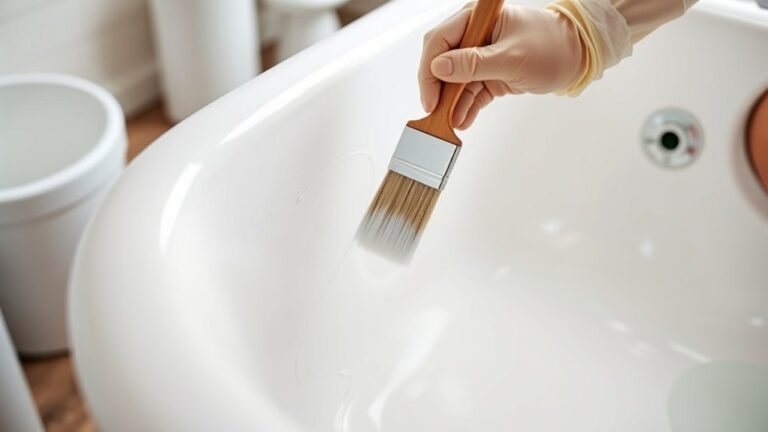
    Next, sand the surface with fine-grit sandpaper to create a slightly rough texture that helps the refinishing coat bond better. When applying the refinishing product, use even, steady strokes and avoid rushing to prevent streaks or bubbles.

    Maintaining proper ventilation and temperature will also improve curing and durability. By paying attention to these details, you not only enhance your tub’s functionality but also boost your home maintenance and interior aesthetics, giving your bathroom a fresh, appealing look that lasts.

    Common Refinishing Mistakes to Avoid

    Even with careful preparation and application, refinishing a porcelain bathtub can come with pitfalls that might undermine your efforts. To avoid common mistakes, keep these key points in mind:

    Refinishing a porcelain bathtub requires careful attention to avoid common mistakes that can compromise your results.

    1. Neglecting crack repair: Small cracks often worsen if you skip proper repair before refinishing. Address every crack thoroughly to ensure a smooth, durable surface.
    2. Poor surface cleaning: Any residue or soap scum left behind will prevent the new finish from adhering properly. Clean the tub meticulously before starting.
    3. Improper color matching: Using a shade that doesn’t match your original porcelain can make the refinishing job look amateurish. Test the color in a small, inconspicuous area before applying it fully.

    Caring for Your Refinished Porcelain Bathtub

    How can you keep your refinished porcelain bathtub looking fresh and durable for years? Start by following essential care tips: avoid harsh cleaners, abrasive scrubbing pads, and chemical drain cleaners that can damage the finish. Instead, use mild, non-abrasive cleaners and a soft sponge or cloth.

    After each use, rinse and dry the tub to prevent soap scum and mineral buildup. For long term maintenance, inspect the surface regularly for chips or cracks and address them promptly to avoid worsening damage.

    Also, avoid dropping heavy objects in the tub, which can chip the finish. By consistently applying these care tips and performing routine maintenance, you’ll preserve your refinished bathtub’s beauty and durability, saving time and money on costly repairs or refinishing down the line.

    Frequently Asked Questions

    How Long Does the Refinishing Process Take From Start to Finish?

    The refinishing process takes about 4 to 6 hours from quick prep to final coating. Make sure you wear safety gear throughout to protect yourself from fumes and dust while working efficiently and carefully.

    Can I Refinish a Bathtub With Cracks or Chips?

    Yes, you can refinish a bathtub with cracks or chips. Start with proper crack repair and chip restoration using epoxy fillers to ensure a smooth surface before refinishing. This guarantees durability and a flawless finish.

    Is Porcelain Bathtub Refinishing Safe for Families With Children?

    Yes, you can use safe materials designed for child safety when refinishing your porcelain bathtub.

    Just ensure proper ventilation and curing time to avoid exposing your children to fumes or chemicals during the process.

    How Do I Dispose of Leftover Refinishing Materials Safely?

    You should follow local disposal methods for leftover materials, like taking them to hazardous waste collection sites.

    Don’t pour chemicals down drains or throw them in regular trash to keep your family and environment safe.

    Can I Refinish a Bathtub With a Strong Odor or Stains?

    When it comes to a strong odor or surface stains, don’t put all your eggs in one basket; poor ventilation and leftover chemicals can lead to safety concerns.

    Ensure proper airflow and clean thoroughly before refinishing.

    Conclusion

    Refinishing your porcelain bathtub yourself can save you up to 70% compared to hiring a pro, making it a smart, budget-friendly choice. By following proper prep, using the right materials, and applying thin, even coats, you’ll achieve a durable, smooth finish that lasts.

    Remember, patience and safety gear are key. With care, your refreshed tub will look stunning and hold up beautifully for years—proving DIY can deliver professional results.

    Porcelain bathtub refinishing is a rewarding project that combines savings and quality, allowing you to enjoy a beautifully restored tub without the high cost.