Tag: bathtub safety

  • How to Use a Bathtub Transfer Bench

    How to Use a Bathtub Transfer Bench

    Getting into a bathtub can feel like maneuvering a small obstacle course, but using a bathtub transfer bench can make the process much safer and easier. You’ll want to start by positioning the bench securely and sitting carefully on its edge, guaranteeing your movements are steady and controlled.

    With the right technique, you can slide into the tub confidently, but there are key steps to follow that guarantee your safety and comfort every time. Taking your time and ensuring the bench is stable will help prevent slips or falls during the transfer.

    Key Takeaways

    • Position the bench securely outside the tub on a flat surface for stable seating and easy access.
    • Adjust the bench legs to match the tub height for comfortable, ergonomic sitting.
    • Sit on the bench seat outside the tub, then slowly slide over the bench into the tub.
    • Use grab bars and non-slip mats around the bench for added safety while transferring.
    • Regularly inspect and tighten all parts to ensure the bench remains stable and secure during use.

    What Is a Bathtub Transfer Bench and Who Needs One

    bathtub transfer bench promotes safe independence

    A bathtub transfer bench is a specially designed seat that helps you safely get in and out of the tub, especially if you have limited mobility or balance issues. This device markedly improves bathroom safety by reducing the risk of slips and falls.

    If you experience weakness, arthritis, or recovery from surgery, a transfer bench can make bathing easier and less stressful. Using this bench, you sit down outside the tub and slide over, minimizing dangerous movements.

    To keep it reliable, regular device maintenance is key. Check for loose parts, clean it frequently, and ensure non-slip pads are intact. By doing so, you maintain a safe and supportive bathing environment tailored to your needs.

    This simple tool can make a big difference in your independence and confidence.

    How to Choose the Right Bathtub Transfer Bench

    When choosing a bathtub transfer bench, start by checking the weight capacity to ensure it supports you safely. Next, consider the seat dimensions so you have enough space to sit comfortably.

    These factors will help you find a bench that fits your needs and keeps you secure.

    Assess Weight Capacity

    How much weight can your bathtub transfer bench safely support? It’s essential to check the weight capacity before making a choice. Every bench comes with a specified weight limit based on rigorous weight testing.

    You need to select one that comfortably exceeds your body weight to ensure safety and durability. Don’t rely on estimates; look for exact figures provided by the manufacturer. Also, consider any additional weight from clothing or assistance devices.

    Choosing a bench with a higher weight capacity than you think you need adds a safety margin. Remember, using a bench beyond its weight limit increases the risk of accidents. Prioritize models with clear weight testing certifications to guarantee reliability and peace of mind during use.

    Consider Seat Dimensions

    After ensuring the bench can support your weight safely, the next step is to focus on the seat dimensions. You’ll want a seat wide and deep enough to sit comfortably without feeling cramped or unstable. Consider your body size and mobility needs to avoid discomfort or difficulty shifting while bathing.

    Also, check the bench placement in your tub. Make sure there’s enough room for the seat to fit properly without blocking faucets or restricting movement. Keep in mind that the bench’s weight capacity ties directly to seat size; larger seats often support more weight but require more space.

    Measuring your tub beforehand helps you choose a bench that fits well and supports you securely, making your bathing experience safer and more comfortable.

    How to Prepare Your Bathroom for a Bathtub Transfer Bench

    bathroom transfer bench readiness clearance measurements non slip

    Preparing your bathroom for a bathtub transfer bench involves careful planning to ensure safety and ease of use. Start by assessing your bathroom decor to make sure the bench complements your space without causing clutter. Clear any unnecessary items around the bathtub to create enough room for the bench and smooth movement.

    Next, check your plumbing measurements to ensure the bench won’t interfere with faucets or showerheads. Measure the height and width of your tub’s edge and the space around it, so the bench fits properly. Also, consider the floor surface. Adding non-slip mats can improve stability.

    Taking these steps helps you create a safe, comfortable environment that supports your transfer bench’s function while maintaining your bathroom’s style.

    How to Safely Install a Bathtub Transfer Bench

    Once your bathroom is set up with enough space and safety features, you can focus on installing the bathtub transfer bench correctly. Start by aligning the bench so one side rests securely outside the tub, improving shower accessibility.

    Adjust the legs to fit the tub’s height, ensuring comfort and proper bathroom ergonomics. Tighten all locking mechanisms to prevent movement.

    Step Details
    Position Bench Outside tub on one side for easy access
    Adjust Legs Match tub height for ergonomic seating
    Secure Locks Prevent slipping during use

    Check that the bench is stable before use. This installation enhances safety and comfort, making your bathing routine easier and more accessible.

    How to Use a Bathtub Transfer Bench: Sitting, Sliding, and Exiting

    bathtub transfer bench safety steps

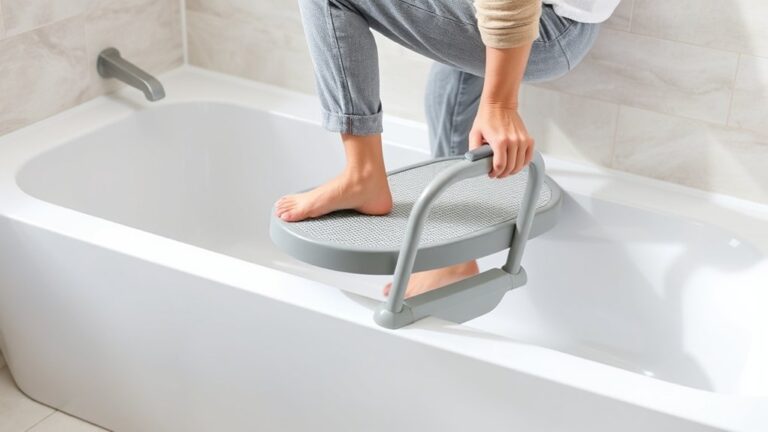
    How exactly do you use a bathtub transfer bench to assure safety and ease? Start by placing yourself firmly on the bench seat outside the tub, ensuring your feet are flat on the ground. Avoid any unrelated topic or off topic concerns—focus solely on your movements.

    Next, gently slide your body sideways across the bench, moving one hip at a time until you’re fully over the tub. Use the bench’s armrests or grab bars for support as you slide.

    When it’s time to exit, reverse the process carefully: slide back onto the bench seat, then stand up steadily from there. Staying focused on sitting, sliding, and exiting helps you maintain balance and prevents accidents without distraction from unrelated topic or off topic concerns.

    Essential Safety Tips for Using a Bathtub Transfer Bench

    To stay safe while using a bathtub transfer bench, make sure you place the bench securely and evenly. Always use a firm grip when sliding on and off the bench to prevent slips.

    Don’t forget to check your equipment regularly for any wear or damage before each use.

    Proper Bench Placement

    Positioning your bathtub transfer bench correctly is necessary for safe and comfortable use. Start by evaluating your bathroom layout to find the most accessible spot that doesn’t obstruct doorways or other fixtures.

    Ensure the bench’s legs rest firmly on a dry, non-slip surface inside and outside the tub. Align the bench so its ergonomic grips are within easy reach, providing support as you move.

    Placement Aspect Key Considerations
    Bench Location Near tub edge, clear access
    Surface Stability Dry, non-slip floor and tub bottom
    Ergonomic Grips Positioned for easy reach
    Doorway Clearance Unobstructed entry and exit
    Tub Compatibility Bench fits tub shape and size securely

    Proper placement helps prevent slips and supports smooth transfers.

    Secure Grip Techniques

    Because maintaining a secure grip is essential for preventing falls, you’ll want to focus on how your hands interact with the bench’s surfaces. Start by placing your hands firmly on the bench’s textured areas or grab bars, where available, to ensure a secure grip.

    Avoid wet or slippery spots, as they can compromise your hand placement. When moving, keep your hands steady and avoid sudden shifts that might cause you to lose balance.

    If the bench has adjustable handles, position them so they’re easy to reach and provide maximum support. Remember, proper hand placement not only helps stabilize you but also builds confidence during transfers.

    Always prioritize a secure grip to stay safe and make your bathtub experience more comfortable.

    Regular Equipment Inspection

    How often do you check your bathtub transfer bench for wear and tear? Regular equipment inspection is key to maintaining bath safety and ensuring product durability.

    Before each use, examine the bench for cracks, loose screws, or worn-out rubber tips. These small issues can compromise stability and increase the risk of slips.

    Pay close attention to the seat and legs. Make sure the bench feels sturdy and doesn’t wobble.

    Clean the bench regularly to prevent mold buildup, which can make surfaces slippery. Don’t hesitate to tighten any loose parts or replace damaged components immediately.

    How to Clean and Maintain Your Bathtub Transfer Bench

    Regularly cleaning and maintaining your bathtub transfer bench ensures it stays safe and reliable for daily use. Start by wiping down the bench after each use to prevent soap scum and mildew buildup. Pay special attention to waterproof seals, making sure they remain intact and free from cracks.

    Keep your bathtub transfer bench clean and inspect seals regularly to ensure safety and prevent mildew buildup.

    Keep your bathroom organization simple by storing cleaning supplies nearby for quick access. To maintain your bench properly, follow these steps:

    • Use mild soap and warm water for routine cleaning
    • Inspect and dry waterproof seals to prevent mold
    • Tighten any loose screws or fittings regularly
    • Store the bench in a dry area when not in use

    Troubleshooting Common Bathtub Transfer Bench Issues

    Maintaining your bathtub transfer bench helps reduce problems, but occasional issues can still arise. If you notice wobbling, first check that all legs are firmly adjusted to the floor. Uneven surfaces often cause instability. Use a level or place non-slip pads under the legs.

    Sticking or squeaking hinges? Apply a small amount of lubricant to keep movement smooth. Avoid irrelevant topic distractions like unrelated product reviews; focus on two word discussion ideas such as “tightening screws” or “seat adjustment” for clarity.

    If the bench feels slippery, ensure the seat’s non-slip surface is clean and intact. Regularly inspect for cracks or damage, and replace any faulty parts promptly. By troubleshooting these common issues, you’ll keep your transfer bench safe and reliable for daily use.

    How to Prevent Slips and Falls With a Bathtub Transfer Bench

    Why do slips and falls happen so often in the bathroom? Wet surfaces and limited support increase risk, especially when using a bathtub transfer bench.

    To boost bath safety and prevent accidents, you should:

    • Place non slip mats inside and outside the tub for better grip.
    • Ensure the transfer bench is securely positioned and stable before use.
    • Keep the bathroom floor dry by wiping up water immediately.
    • Use grab bars near the bench to provide extra support when sitting or standing.

    When to Replace Your Bathtub Transfer Bench

    You should replace your bathtub transfer bench if you notice any signs of wear, like cracks, loose parts, or rust. These issues can compromise your safety and increase the risk of slips or falls.

    Regularly inspect your bench to guarantee it stays secure and reliable every time you use it.

    Signs of Wear

    How can you tell when it’s time to replace your bathtub transfer bench? Paying attention to signs of wear helps you decide when replacing bench is necessary to maintain safety and comfort.

    Over time, materials durability can decline, making the bench unreliable.

    Look for these signs:

    • Cracks or splits in the plastic or metal frame
    • Rust or corrosion on metal parts
    • Worn or torn seat surface
    • Loose or damaged rubber tips on legs

    If you spot any of these issues, it’s a clear indication that your bench no longer provides the stability it should. Replacing bench promptly ensures you continue to have a secure and comfortable bathing experience without risking injury.

    Safety Concerns

    Although bathtub transfer benches are designed to enhance your safety, they can become hazards if they’re damaged or worn out. You should replace your bench immediately if you notice cracks, loose parts, or rust. These issues compromise stability and increase your risk of slips or falls.

    Don’t wait until it’s too late. Regularly inspect your bench to maintain a safe bathing environment. Replacing a worn bench also lets you upgrade your bathroom decor, helping create a relaxing spa experience that’s both stylish and secure.

    Frequently Asked Questions

    Can a Bathtub Transfer Bench Be Used With a Shower Curtain?

    Yes, you can use a bathtub transfer bench with a shower curtain. Ensure shower curtain compatibility for bathtub safety. Choose adjustable benches for a secure fit, and follow travel guidelines to maintain stability and prevent slips during use.

    Are Bathtub Transfer Benches Suitable for Children?

    Like a sturdy stepping stone in a stream, bathtub transfer benches provide child safety by preventing slips. You’ll want one with adjustable height to fit your child comfortably, ensuring secure, confident bath time every time.

    What Materials Are Bathtub Transfer Benches Typically Made From?

    Bathtub transfer benches typically use materials focused design with rust-resistant aluminum frames and non-slip plastic seats. These choices prioritize safety considerations, ensuring durability and stability while you transfer safely in wet, slippery environments.

    Can I Travel With a Bathtub Transfer Bench?

    You can absolutely travel with a bathtub transfer bench, but don’t rush packing. Its lightweight design guarantees product portability, while sturdy construction supports travel safety.

    Always secure it properly to avoid damage during your journey.

    Do Bathtub Transfer Benches Fit All Bathtub Sizes?

    Bathtub transfer benches don’t fit all bathtub sizes perfectly. You’ll want to check your bathtub sizing carefully and choose a bench designed with accessibility design in mind to ensure a safe, comfortable fit for your specific tub.

    Conclusion

    Using a bathtub transfer bench isn’t just about convenience—it’s about reclaiming your independence safely. Remember, each step you take on or off the bench is a step toward confidence and security in your bathroom.

    Like a trusted companion, it supports you every time, so keep it well-maintained and properly installed. With care and attention, your transfer bench will help you glide through bath time smoothly.

    This turns a once risky task into a simple, safe routine, making the most of your bathtub transfer bench every time you use it.