Tag: bathroom remodel

  • How to Remove a Porcelain Bathtub

    How to Remove a Porcelain Bathtub

    Removing a porcelain bathtub is like performing surgery on your bathroom—it demands precision, the right tools, and careful planning.

    When removing a porcelain bathtub, you’ll need to shut off water, disconnect fixtures, and protect your space from dust and debris before you even begin.

    Skipping these steps can lead to costly mistakes, but if you follow a clear, methodical process, you’ll avoid common pitfalls and make the job manageable.

    Let’s start by gathering what you’ll need.

    Key Takeaways

    • Turn off the water supply, disconnect plumbing fixtures, and remove caulking around the tub edges carefully.
    • Wear heavy-duty gloves, safety goggles, and a dust mask for protection against sharp porcelain shards and dust.
    • Use a reciprocating saw to cut metal supports if needed, then pry the tub loose with a pry bar and hammer.
    • Support adjacent walls to prevent damage and gently lift the tub out with at least two people to avoid injury.
    • Dispose of the tub following local guidelines and prepare the space by cleaning and inspecting subfloor and framing.

    Tools and Materials for Removing a Porcelain Bathtub

    safety first tub removal toolkit notes

    What tools and materials will you need to remove a porcelain bathtub safely and efficiently? First, prioritize safety protocols: wear heavy-duty gloves, safety goggles, and a dust mask to protect against sharp porcelain shards and dust.

    Prioritize safety by wearing gloves, goggles, and a dust mask to protect against sharp porcelain shards and dust.

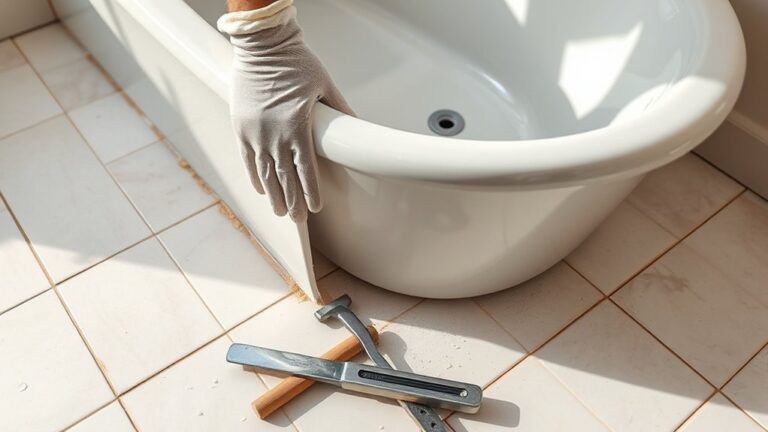
    For tool recommendations, gather a reciprocating saw with a demolition blade to cut through metal supports and the tub itself if necessary. A pry bar and hammer will help loosen and remove the tub from its frame and walls.

    Also, use utility knives to cut caulking and sealants around the tub edges. Have heavy-duty plastic sheeting and drop cloths to protect the surrounding area and collect debris. Finally, a bucket and rags are essential for managing residual water.

    Following these ideas ensures a controlled, efficient removal process without injury or damage.

    How to Prepare Your Bathroom for Porcelain Bathtub Removal

    Before you begin removing your porcelain bathtub, you need to prepare the bathroom to guarantee safety and protect surrounding surfaces. Start by turning off the water supply and disconnecting plumbing fixtures to avoid leaks.

    Remove any nearby furniture and cover immovable items with plastic sheeting. Use painter’s tape and heavy-duty plastic to seal doorways and vents, creating an effective dust containment barrier to prevent debris from spreading.

    Wear appropriate personal protective equipment, including gloves, goggles, and a dust mask, to uphold pre removal safety standards. Clear the floor of rugs or mats and place drop cloths to protect tiles or flooring.

    Ensure proper ventilation while maintaining dust containment. These steps minimize hazards and create a controlled workspace, making the removal process safer and more efficient.

    Troubleshooting Common Problems When Removing a Porcelain Tub

    stubborn adhesives careful removal risks

    You’ll often encounter stubborn adhesives that resist scraping, requiring the right solvents and tools to loosen them effectively.

    Take care to support adjacent walls to prevent cracking or damage during tub removal.

    Addressing these issues early will save time and avoid costly repairs.

    Handling Stubborn Adhesives

    How do you effectively tackle stubborn adhesives when removing a porcelain bathtub? Start by applying a commercial adhesive remover formulated for construction materials. Let it sit for the recommended time to soften the bond.

    Use a plastic scraper to gently pry the adhesive without damaging the tub’s surface. For persistent spots, repeat the application or use a heat gun at low settings to loosen the adhesive, then scrape again.

    Avoid metal tools that can chip porcelain. Once the adhesive is removed, clean the surface thoroughly to prevent residue from complicating porcelain tub disposal.

    Proper handling of stubborn adhesives not only eases removal but also ensures safer, cleaner disposal and prepares the area for any subsequent renovation steps.

    Preventing Wall Damage

    Effectively removing stubborn adhesives reduces the risk of damaging surrounding materials, but protecting your walls requires additional care. To avoid porcelain danger during removal, use plastic or wooden shims between the tub and wall to prevent direct contact.

    Avoid metal tools that can scratch or chip wall surfaces. When loosening the tub, apply gentle, controlled force to minimize vibrations that may crack drywall or loosen tile. Seal exposed wall edges with painter’s tape to shield against accidental damage and moisture infiltration.

    If you encounter stubborn caulk, soften it with a heat gun or commercial remover rather than prying aggressively. Prioritizing wall preservation ensures you maintain structural integrity and reduce costly repairs after the tub’s removal.

    Step-by-Step Guide to Detaching and Removing Your Porcelain Bathtub

    Where do you begin when detaching a porcelain bathtub? First, turn off the water supply and disconnect the faucet and drain fixtures carefully. Remove any caulking around the tub edges to prevent wall damage, preserving your bathroom design.

    Next, detach the access panel to reach the tub’s mounting brackets. Unscrew or pry off these brackets, noting their placement for reinstallation or remodeling. Support the tub as you loosen it from the wall framing to avoid injury or structural damage.

    Safety considerations are critical. Wear gloves, eye protection, and ensure the area is well-ventilated. Finally, gently lift the tub out of its alcove, using help if necessary to manage its weight and prevent damage to your bathroom or yourself during removal.

    How to Handle and Dispose of a Porcelain Bathtub Safely

    safe careful porcelain tub disposal

    Once you’ve successfully removed the porcelain bathtub from its alcove, focus on handling it with care to prevent injury and avoid damaging your property. Porcelain tubs are heavy and brittle, so plan your moves carefully. Avoid unrelated topics or distractions while maneuvering it.

    Consider these ideas for safe handling and disposal:

    • Use proper lifting techniques, involving at least two people, to distribute weight evenly.
    • Wear protective gloves and safety goggles to guard against sharp edges.
    • Inspect the tub for cracks or damage that could cause sudden breaks.
    • Contact local waste management or recycling centers for porcelain disposal guidelines.

    Following these steps ensures safety and environmental responsibility while avoiding unnecessary complications when handling and disposing of your porcelain bathtub.

    Next Steps After Removing Your Porcelain Bathtub

    After removing your porcelain bathtub, plan how to dispose of or recycle the materials responsibly to comply with local regulations. Clear the area thoroughly and inspect the plumbing and subfloor for any damage or needed repairs.

    Once the space is prepared, you can proceed with the measurements and setup required for your new bathtub installation.

    Disposal And Recycling Options

    How should you handle the porcelain bathtub once it’s removed? Proper disposal and recycling depend on removal timing and local permit requirements. Plan disposal promptly to avoid storage issues and ensure compliance with regulations.

    Consider these options:

    • Contact your local waste management for bulk pickup services that accept porcelain tubs.
    • Explore recycling centers that process porcelain and metal components separately.
    • Rent a dumpster if removal timing coincides with other renovation debris for efficient disposal.
    • Donate or sell intact tubs to salvage yards or reuse organizations if in good condition.

    Always verify permit requirements before disposal to avoid fines. Efficient handling minimizes environmental impact and aligns with municipal codes, ensuring your project proceeds smoothly after removal.

    Preparing For New Installation

    What’s the best way to prepare your space for the new bathtub installation? First, ensure the area is clean and free of debris from the removal process. Check the plumbing for leaks or damage and repair as needed.

    Measure the space accurately to confirm the new bathtub fits correctly, avoiding any unused topic or unrelated discussion during this step. Inspect the subfloor for water damage or rot and reinforce or replace it if necessary.

    Confirm the wall studs and framing are secure and level to support the new tub. Finally, install any necessary plumbing fixtures or drainage components before setting the bathtub.

    This methodical approach guarantees a smooth installation without overlooking critical details related to your project’s next phase.

    Frequently Asked Questions

    Can I Remove a Porcelain Bathtub by Myself Without Professional Help?

    You can remove a porcelain bathtub yourself, but ensure porcelain safety by wearing protective gear and handling carefully. Be prepared for disposal challenges since porcelain is heavy and bulky, requiring proper local waste management or recycling options.

    How Long Does the Entire Bathtub Removal Process Usually Take?

    When it comes to remodeling timelines, expect the entire bathtub removal process to take about 4 to 8 hours, provided you follow safety protocols closely.

    Rushing might backfire, so plan carefully to avoid setbacks.

    What Are Signs That My Bathtub Needs to Be Replaced Rather Than Repaired?

    You’ll know your bathtub needs replacement not repair if the porcelain alternative has cracks, chips, or stains that penetrate the surface.

    Also, if the bathtub lifespan exceeds 30 years, causing structural weakening and persistent leaks, replacement is necessary.

    Are There Eco-Friendly Options for Disposing of Old Porcelain Bathtubs?

    You’ll want to know that over 60% of porcelain bathtubs can be recycled. For eco friendly disposal, explore local recycling options or donation programs that repurpose materials, reducing landfill waste and conserving resources efficiently.

    What Are the Cost Estimates for Hiring Professionals to Remove a Porcelain Bathtub?

    You can expect bathroom demolition and tub removal costs to range from $500 to $1,500, depending on labor rates, disposal fees, and tub size.

    Get detailed quotes to ensure accurate budgeting for your project.

    Conclusion

    You’ll shut off the water, disconnect fixtures, and seal the area. You’ll cut through caulk, pry loose mounting brackets, and carefully detach the tub.

    You’ll lift with a partner, inspect for damage, and dispose of debris responsibly. Each step demands precision, teamwork, and safety.

    By following this methodical process, you’ll remove your porcelain bathtub efficiently and prepare your space perfectly for the next installation of your porcelain bathtub.