Are Heat Pump Hot Water Systems Noisy
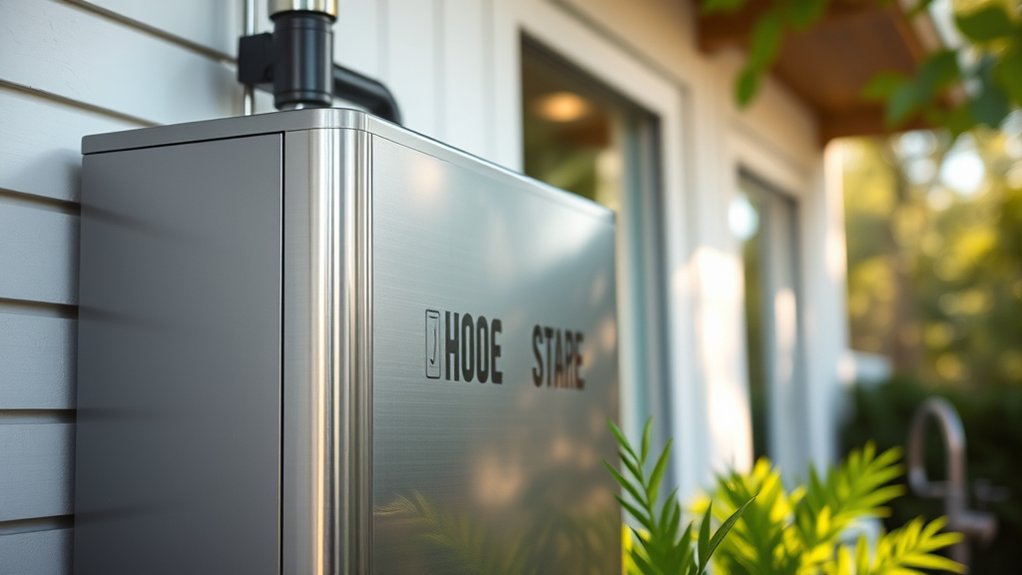
Imagine a conversation at around 50 decibels—that’s roughly the noise level a heat pump hot water system produces. Are heat pump hot water systems noisy? This background hum is typically mild, but you might wonder if it’s a minor nuisance or a significant disturbance compared to traditional electric or gas heaters.
The noise level depends heavily on factors like installation quality, component design, and placement. Understanding these variables can help you assess whether a heat pump fits your home environment without compromising quiet comfort.
With proper setup, many find the sound barely noticeable, making heat pump hot water systems a peaceful and energy-efficient choice.
Key Takeaways
- Heat pump hot water systems typically produce 40-60 decibels, similar to normal conversation noise levels.
- The compressor and fan are the main noise sources, generating mechanical and vibration sounds.
- Proper installation and placement away from living areas significantly reduce perceived noise disruption.
- Sound-dampening materials and vibration isolation mounts help minimize structural noise transmission.
- Noise tolerance varies by environment, with open patios being more sensitive than enclosed spaces.
How Noisy Are Heat Pump Hot Water Systems Compared to Traditional Heaters?
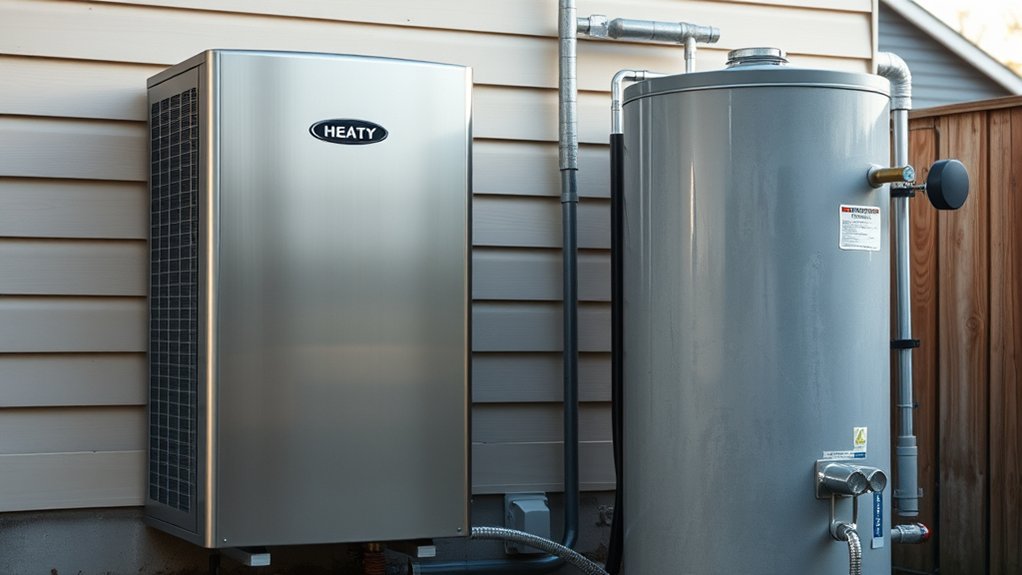
How do heat pump hot water systems compare in noise levels to traditional heaters? When you conduct a noise comparison, heat pump systems generally produce more ambient sound due to their compressor and fan operation, unlike traditional electric or gas heaters, which operate quietly or intermittently.
However, the noise level typically ranges between 40-60 decibels, comparable to a normal conversation, not consistently disruptive. Installation considerations significantly influence perceived noise; positioning the unit away from living areas and using vibration-isolating mounts can mitigate sound transmission.
You should also account for local noise regulations and the unit’s rated noise level during selection. Ultimately, while heat pumps are noisier than traditional heaters, thoughtful installation can minimize noise impact, making them a viable, energy-efficient alternative without excessive sound disturbance.
What Parts of a Heat Pump Cause the Most Noise?
Understanding which components generate the most noise can help you address and reduce sound levels effectively. In a heat pump hot water system, the compressor typically produces the highest noise due to its mechanical operation and motor vibrations.
Identifying noisy components, especially the compressor, is key to effectively reducing heat pump sound levels.
The fan, responsible for airflow, also contributes significantly, especially at higher speeds. Both components transmit vibrations through the system’s frame, which can amplify noise if not properly managed.
You should focus on installing effective vibration isolation mounts to minimize structural transmission. Additionally, sound insulation around the compressor and fan housing can reduce airborne noise.
Other parts like refrigerant lines and pumps generate less noise but still benefit from vibration isolation. By targeting these key areas, you can efficiently lower overall sound emissions without compromising system performance.
What Affects Heat Pump Noise Levels?
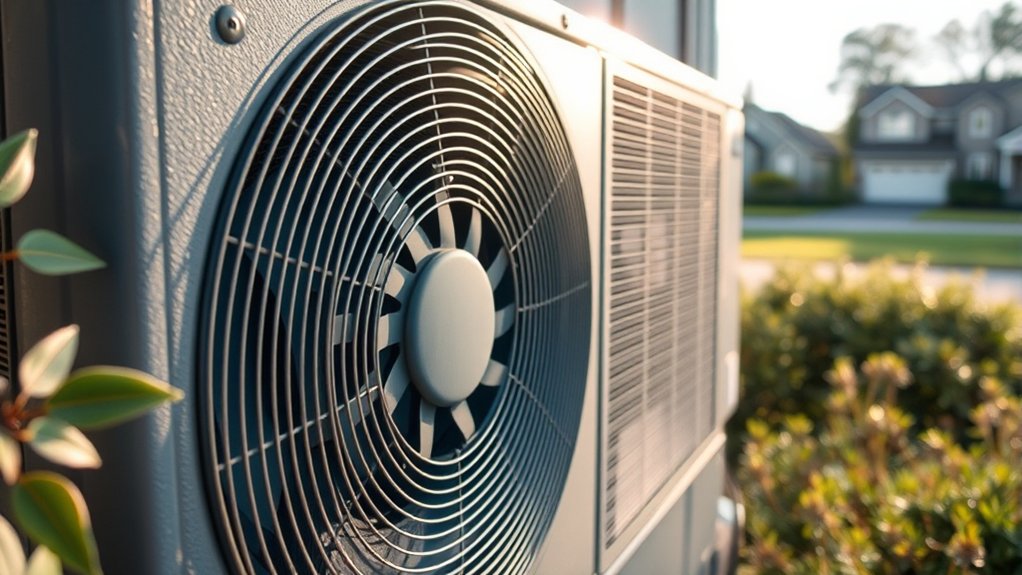
You’ll notice that the compressor’s design and operation directly influence the noise you hear from a heat pump. Additionally, the surrounding environment plays a critical role by either amplifying or dampening these sounds.
Understanding these factors helps you assess and manage overall noise levels effectively.
Compressor Sound Factors
What factors determine the noise level of a heat pump’s compressor? Primarily, compressor vibration plays a critical role. When the compressor operates, mechanical components create oscillations that transmit through the unit’s frame, generating audible noise.
The quality of mounting and isolation materials directly influences how much vibration turns into sound. Additionally, refrigerant hiss affects perceived noise; this occurs as high-pressure refrigerant flows through valves and expansion devices, producing a characteristic hissing sound.
Factors such as refrigerant type, pressure levels, and valve design impact the intensity of this hiss. You should also consider compressor speed and load conditions. Higher speeds and fluctuating loads generally increase both vibration and refrigerant noise.
Understanding these elements helps you assess and mitigate compressor-related sound levels effectively.
Environmental Noise Impact
How does the surrounding environment influence the noise produced by a heat pump? Several factors come into play, including ambient noise levels, proximity to reflective surfaces, and local topography.
When you conduct a careful noise assessment, you must consider how sound waves interact with nearby walls, vegetation, and open spaces, as these elements can either amplify or dampen noise. Additionally, weather conditions like wind direction can carry or dissipate sound differently.
Understanding these variables is crucial for ensuring regulatory compliance, as local noise ordinances often specify maximum permissible sound levels. By analyzing environmental influences precisely, you can strategically position the heat pump to minimize noise impact on neighbors and occupants, maintaining performance without violating regulations.
This approach ensures efficient operation while respecting community noise standards.
How to Choose a Quiet Heat Pump for Your Home
When selecting a heat pump for your home, which factors determine its noise level and overall quietness? Key elements include the compressor type, fan design, and sound insulation. Scroll compressors typically produce less noise than piston types.
Look for models with variable-speed fans, which adjust operation to reduce noise during low-demand periods. Additionally, sound-dampening materials integrated into the unit’s casing contribute to quiet operation.
You should also consider maintenance tips that preserve low noise levels. Regularly cleaning filters and ensuring fan blades remain unobstructed prevents excessive noise buildup. Opt for units with manufacturer-recommended maintenance schedules and easy access for servicing.
Where Should You Install Your Heat Pump to Reduce Noise?
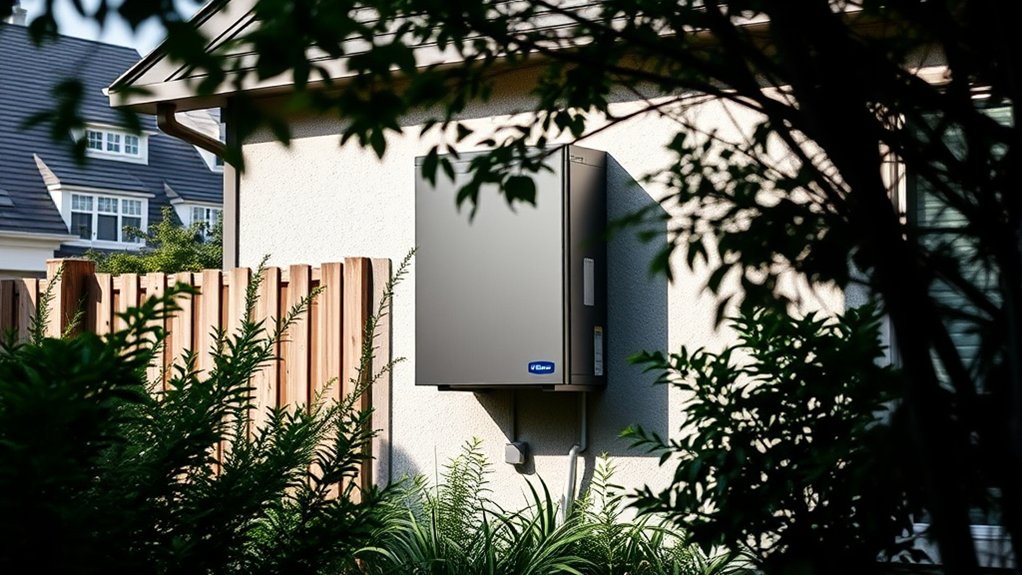
Choosing the optimal location to install your heat pump considerably impacts its noise footprint. When you evaluate installation placement, prioritize areas that naturally buffer sound, such as behind solid walls or inside insulated enclosures.
Avoid positioning the unit near bedrooms or living spaces to minimize disturbance. Perform a noise comparison by testing potential sites at operational volume, ensuring the unit’s sound doesn’t exceed acceptable limits.
Consider elevation as well; installing the heat pump on a rooftop or raised platform can reduce ground-level noise transmission. Additionally, maintain sufficient clearance for airflow and maintenance without compromising noise control.
How to Reduce and Manage Heat Pump Noise at Home
You can significantly reduce heat pump noise by choosing an optimal installation location that minimizes sound transmission. Implementing noise barriers or vibration isolators further controls operational sound levels. By combining strategic placement with targeted noise reduction techniques, you’ll manage noise effectively at home.
Effective Noise Reduction Tips
How can you effectively minimize the operational noise of your heat pump hot water system without compromising its performance? First, maintain an adequate clearance distance around the unit to prevent sound reflections and ensure proper airflow, which reduces mechanical strain and noise.
Next, focus on improving interior acoustics by installing sound-absorbing materials such as acoustic panels or dense insulation near the system’s indoor components; this dampens airborne noise transmission. You can also use vibration isolators or mounts to decouple the unit from rigid surfaces, preventing structure-borne noise.
Regular maintenance, including lubrication and tightening of loose parts, further decreases operational sounds. Combining these targeted strategies allows you to manage noise efficiently while preserving system efficiency and longevity.
Optimal Heat Pump Placement
Minimizing noise from your heat pump hot water system starts with strategic placement. Position your unit away from high-traffic or quiet zones to reduce disturbance. Avoid locations that act as subtopic misfit where noise amplifies due to reflective surfaces or enclosed spaces.
Two word ideas like “sound barrier” and “vibration isolation” can guide your placement choices. Consider airflow and maintenance access without compromising noise control.
| Placement Area | Noise Impact | Emotional Response |
|---|---|---|
| Backyard corner | Low | Relief |
| Near bedroom wall | High | Frustration |
| Garage | Moderate | Tolerance |
| Open patio | Low | Comfort |
| Enclosed porch | High | Annoyance |
Thoughtful placement boosts comfort and minimizes noise-related stress effectively.
Frequently Asked Questions
How Energy-Efficient Are Heat Pump Hot Water Systems?
You’ll find heat pump hot water systems highly energy-efficient, often achieving efficiency measurements of 300% or more.
While noise considerations exist, their advanced design minimizes sound, ensuring optimal performance without significant acoustic impact in your space.
What Is the Average Lifespan of a Heat Pump Hot Water System?
You can expect the average lifespan of a heat pump hot water system to be around 10 to 15 years.
System noise concerns are minimal, as modern units operate quietly with advanced sound-dampening technology.
Are Heat Pump Hot Water Systems Environmentally Friendly?
You’ll find heat pump hot water systems environmentally friendly, as they reduce energy consumption. Keep noise levels low by considering placement carefully, ensuring efficient operation without disturbance.
Maximize their eco-friendly benefits through optimal positioning.
How Much Does a Heat Pump Hot Water System Cost to Install?
You’ll find a heat pump hot water system installation typically runs between $3,000 and $7,000, depending on noise comparison and installation considerations like location, complexity, and unit size. These factors directly impact overall cost and efficiency.
Do Heat Pump Hot Water Systems Require Regular Maintenance?
Yes, you’ll need regular maintenance checks to ensure optimal performance. These include inspecting for refrigerant leaks, cleaning filters, and verifying system pressure.
This helps prevent efficiency loss and extends your heat pump hot water system’s lifespan.
Conclusion
Think of your heat pump like a quiet conversation—typically 40 to 60 decibels, similar to normal speech. If installed and maintained properly, its noise can blend into the background rather than disrupt your space.
By isolating vibrations, choosing sound-dampening casings, and placing the unit strategically away from living areas, you’ll guarantee your system hums efficiently without becoming a nuisance.
With the right approach, managing heat pump noise becomes a precise, manageable task. Ultimately, heat pump hot water systems are designed to operate quietly, ensuring minimal noise impact in your home.