Are Shower Steamers Safe for Cats
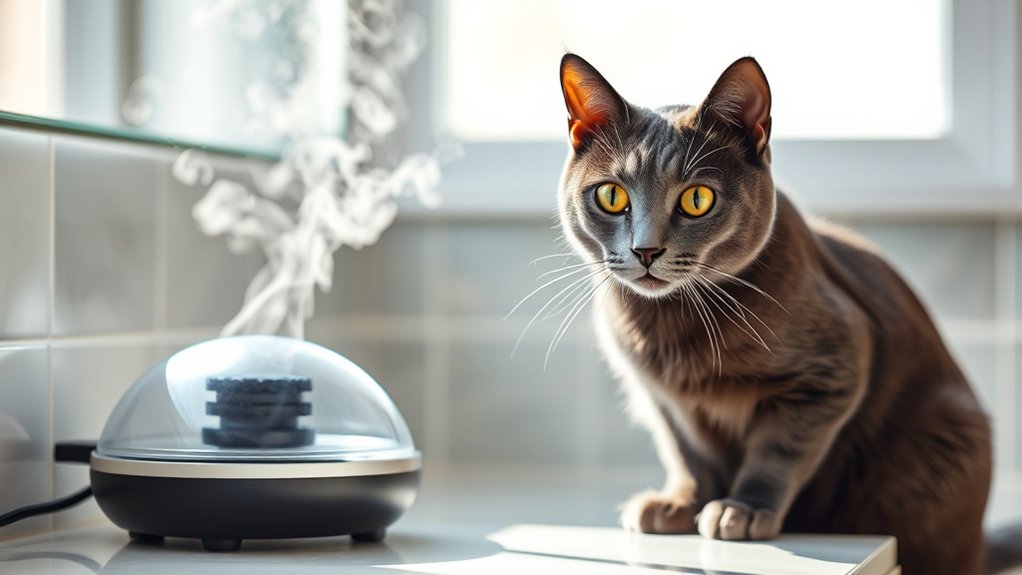
Are shower steamers safe for cats? While these fragrant tablets might seem harmless, they can pose hidden dangers for your feline friend. Shower steamers release essential oils that may irritate or even harm your pet’s sensitive respiratory system and skin.
Before you bring that relaxing aroma into your bathroom, it’s important to understand the risks these products carry. Knowing how to protect your cat from potential harm will help keep your pet safe and comfortable.
Key Takeaways
- Shower steamers often contain essential oils toxic to cats, such as eucalyptus, tea tree, and peppermint, posing inhalation and ingestion risks.
- Cats can suffer respiratory irritation, skin or eye irritation, and toxicity from exposure to steamers’ vapors and residues.
- Safe usage requires storing steamers out of cats’ reach, using well-ventilated areas, and limiting cats’ exposure time.
- Choose steamers with non-toxic, pet-safe ingredients like baking soda and citric acid without synthetic fragrances or harmful oils.
- If cats show coughing, sneezing, drooling, vomiting, or breathing difficulties after exposure, seek veterinary care immediately.
What Shower Steamers Are Made Of
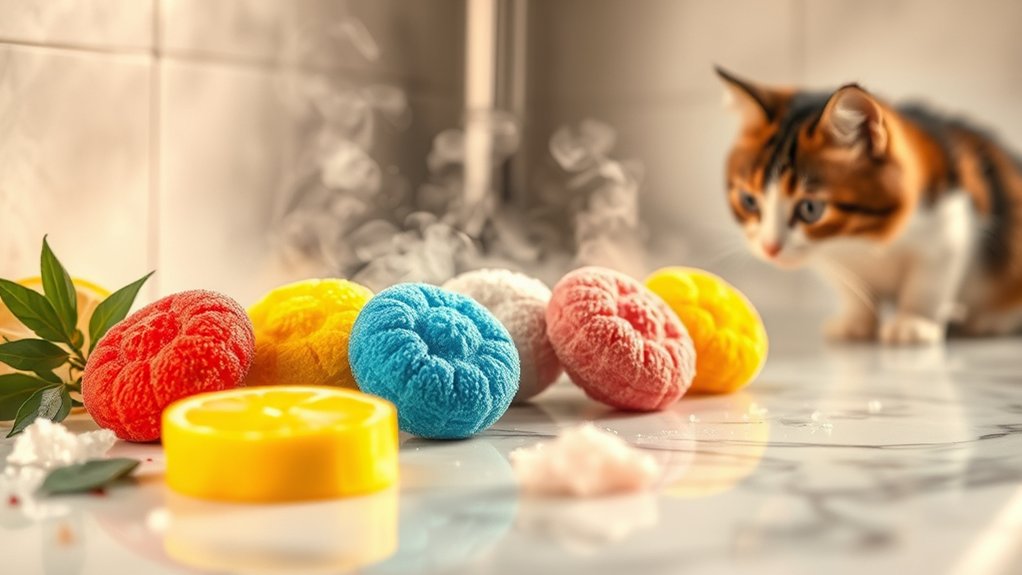
Shower steamers typically contain a blend of ingredients like baking soda, citric acid, essential oils, and sometimes additional fragrances or colorants. When selecting a shower steamer, you’ll want to look for products made with safe materials to reduce potential health risks.
Non toxic oils such as lavender, eucalyptus, or peppermint are commonly used because they release pleasant aromas without harmful chemicals. However, even these natural components can cause irritation or allergic reactions in sensitive individuals or pets.
Some steamers include synthetic fragrances or colorants, which may introduce unwanted toxins. Understanding the exact composition helps you make informed choices, especially if you have concerns about safety.
Always check ingredient lists carefully to ensure that shower steamers contain only safe materials and non toxic oils for a safer experience.
How Cats Are Exposed to Shower Steamer Risks
You need to be aware that your cat can inhale essential oils released by shower steamers, which may irritate their respiratory system. They can also come into direct contact with the steam, potentially causing skin or eye irritation.
Additionally, accidental ingestion of shower steamer pieces poses serious health risks if your cat is curious or playful around the bathroom.
Inhalation of Essential Oils
How exactly can your cat be affected by essential oils released from steamers? When you use shower steamers, essential oils vaporize and fill the air. Your cat inhales these airborne oils, which can irritate their respiratory system.
Cats’ bodies metabolize essential oils differently from humans, making them more sensitive and prone to adverse reactions. To protect cat safety, you need to understand that even small amounts of inhaled essential oils may cause coughing, sneezing, or difficulty breathing.
Some oils are more toxic than others, so exposure levels matter. You should limit your cat’s presence in the bathroom during steamer use and ensure proper ventilation.
Direct Contact With Steam
Where can your cat come into direct contact with risks from shower steamers? When the steamer dissolves, the steam carries essential oils and chemicals that can settle on surfaces your cat touches. Cats and blankets near the bathroom or laundry area can absorb these residues, increasing their exposure.
Similarly, water bowls placed close to the bathroom may collect tiny droplets from the steam, posing a risk if your cat drinks from them. Plants near the shower can also retain essential oil residues on their leaves or soil, which your cat might sniff or nibble.
To minimize risks, keep your cat’s resting spots, water bowls, and plants away from areas where shower steamers are used. This cautious approach helps protect your cat from direct contact with potentially harmful substances in the steam.
Accidental Ingestion Risks
Besides exposure through steam and surface residues, shower steamers pose a significant risk when your cat accidentally ingests them. Cats are naturally curious and may chew on dropped or accessible steamers, mistaking them for treats or toys.
These products often contain essential oils and other chemicals that can be toxic if swallowed. For your cat’s safety, always store shower steamers out of reach. Pay close attention to product labeling, as it usually provides important warnings about ingestion risks and ingredients.
If your cat does ingest a shower steamer, seek veterinary help immediately, as prompt treatment can prevent serious complications. Prioritizing proper storage and closely reading product labels are essential steps to protect your feline friend from accidental poisoning.
How Shower Steamer Ingredients Can Harm Cats
Why should you be concerned about the ingredients in shower steamers when it comes to your cat? Many shower steamers contain compounds that aren’t cat safe or non toxic. These ingredients can irritate or harm your feline friend, even if exposure is accidental.
Common harmful components include:
- Essential oils like eucalyptus or tea tree, toxic to cats
- Citric acid, which can cause skin irritation or stomach upset
- Synthetic fragrances that may trigger respiratory issues
Because cats groom themselves frequently, any residue on their fur can lead to ingestion. Even small amounts of these substances can cause adverse reactions. To keep your cat safe, always check ingredients carefully and opt for products labeled cat safe or non toxic.
Taking these precautions helps you protect your pet from hidden dangers in your bathroom.
Signs of Cat Exposure to Shower Steamers
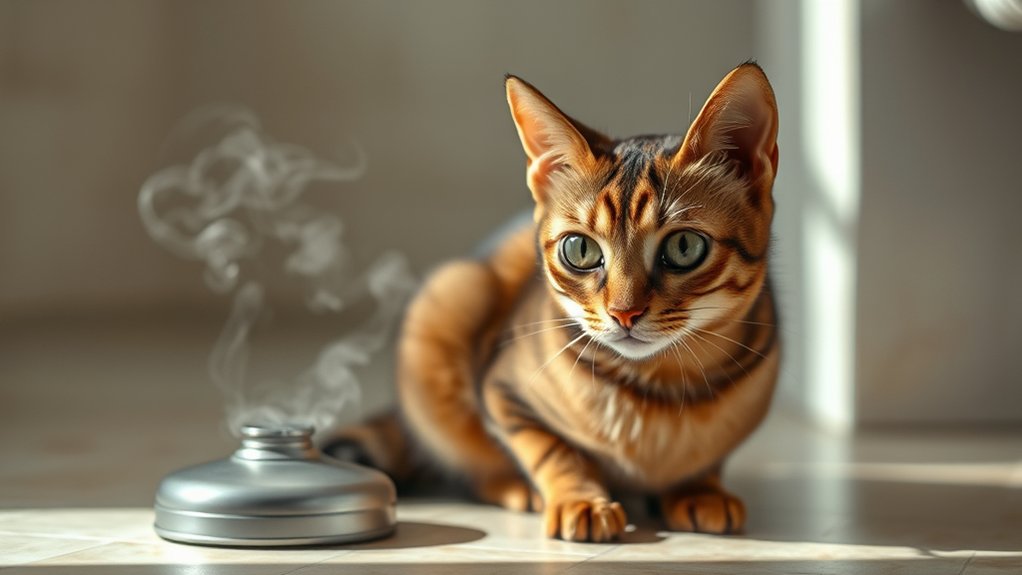
How can you tell if your cat has been exposed to shower steamers? Watch for signs like coughing, sneezing, or difficulty breathing, which can occur due to strong bathing fragrance vapors.
Your cat might also show signs of eye irritation, such as redness, tearing, or pawing at the face. Some cats may develop drooling, vomiting, or lethargy if the exposure is significant.
Because cats are sensitive to many fragrances and chemicals, these symptoms should prompt immediate attention to pet safety. If you notice any unusual behavior or physical symptoms after using shower steamers, remove your cat from the area and ventilate the space.
Monitor your cat closely and consult a veterinarian promptly to address potential adverse effects from shower steamer exposure.
Toxic Ingredients in Shower Steamers for Cats
Recognizing the symptoms of exposure is essential, but understanding what causes those symptoms can help you better protect your cat. Many shower steamers contain toxic fragrances and other harmful ingredients that pose risks to your feline friend. These include:
- Essential oils like eucalyptus, tea tree, and peppermint, which can be toxic when inhaled or ingested by cats.
- Synthetic fragrances that release harmful compounds irritating your cat’s respiratory system.
- Chemical binders and preservatives that may cause allergic reactions or poisoning.
Since cats groom themselves frequently, exposure to these substances can lead to ingestion and increased toxicity. Being aware of these toxic fragrances is vital for your cat’s safety. When choosing shower steamers, always look for pet safe alternatives designed to minimize these risks and keep your home safe for your cat.
Safe Alternatives to Traditional Shower Steamers
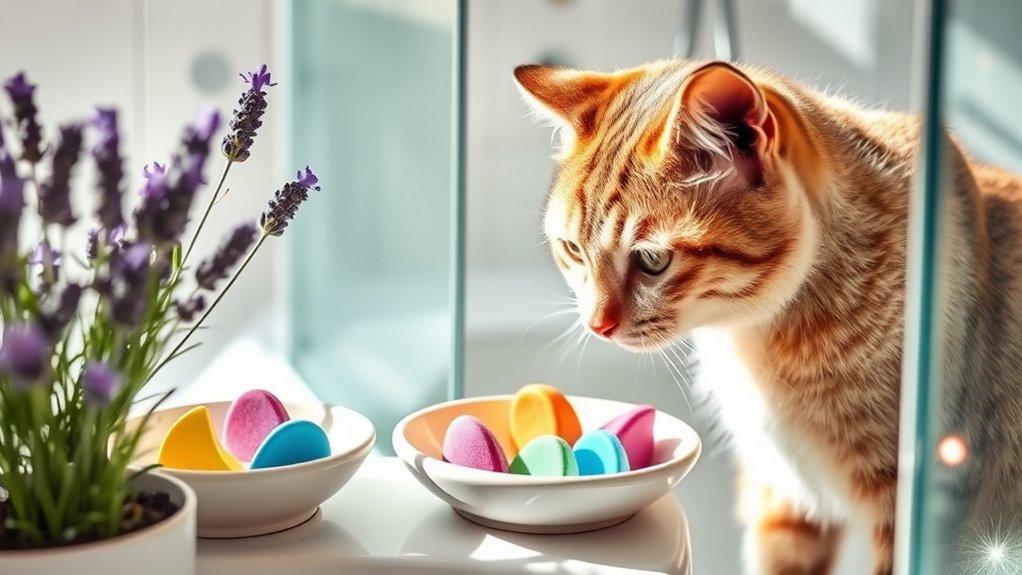
Finding safe alternatives to traditional shower steamers can protect your cat without sacrificing your own relaxation. You can create pet safe blends using essential oils known to be non-toxic to cats, such as lavender or chamomile, but only in very diluted amounts.
Consider using natural ingredients like baking soda and citric acid without added fragrances to avoid harmful chemicals. Incorporate safe routines by ventilating your bathroom well during use and limiting exposure time.
You might also try herbal sachets placed away from your cat’s reach or steam inhalation with plain water enhanced by safe botanicals. Always research each ingredient’s safety and monitor your pet’s behavior closely.
Using Shower Steamers Safely Around Cats
When using shower steamers around your cat, you need to be aware of the potential risks, including respiratory irritation or toxicity from certain ingredients.
To keep your pet safe, make sure to use steamers in well-ventilated areas and never leave your cat unattended near them. Taking these precautions helps you enjoy your shower without compromising your cat’s health.
Potential Risks To Cats
Awareness of the potential risks shower steamers pose to cats is essential for pet owners. These products often contain essential oils and chemicals that can be harmful if inhaled or ingested by your cat.
Cats have unique sensitivities due to their metabolism, influenced by factors like their specific cat diets and any flea medicine they’re taking. Exposure to shower steamers can lead to respiratory irritation, allergic reactions, or even toxicity.
Be vigilant about:
- Essential oils harmful to cats, such as tea tree or eucalyptus
- Interactions with flea medicine that may increase sensitivity
- Cats’ natural grooming behavior, which might cause ingestion of residues
Understanding these risks helps you protect your feline friend from unintended health issues connected to shower steamer use.
Safe Usage Tips
How can you enjoy shower steamers without putting your cat at risk? Prioritize cat safety by selecting steamers free of harmful essential oils like tea tree or eucalyptus. Always use them in well-ventilated areas to minimize airborne exposure.
Keep your cat out of the bathroom during and shortly after use to avoid inhaling concentrated vapors.
| Tip | Description |
|---|---|
| Choose safe oils | Opt for steamers without toxic essential oils |
| Ventilation | Ensure good airflow to disperse steam quickly |
| Limit exposure | Keep your cat away during and after steamer use |
| Storage | Store steamers out of your cat’s reach to prevent ingestion |
Tips for a Cat-Safe Aromatherapy Shower Routine
Why should you be cautious about using aromatherapy shower products around your cat? Cats are sensitive to essential oils and fragrances, which can cause irritation or toxicity, especially if they’re paw licking or lounging nearby.
To keep your feline safe while enjoying aromatherapy, follow these tips:
- Use shower steamers with pet-safe ingredients free from toxic oils like eucalyptus or tea tree.
- Keep your bathroom well-ventilated and allow steam to dissipate before letting your cat back in.
- Prevent your cat from directly accessing steam or residue to avoid ingestion during paw licking.
When to Contact a Vet About Shower Steamer Exposure
Even with careful precautions, accidents involving shower steamers and your cat can happen. If you notice your cat coughing, sneezing, excessive drooling, or difficulty breathing after fragrance exposure, contact your vet immediately. These symptoms may indicate respiratory irritation or toxicity, which require prompt attention to ensure cat safety.
Also, if your cat shows signs of lethargy, vomiting, or unusual behavior, don’t hesitate to seek veterinary advice. Time is crucial, as early intervention can prevent more severe complications.
Keep the packaging of the shower steamer handy to provide your vet with ingredient information. Prioritizing quick action after any suspected exposure helps protect your cat’s health and well-being. Always err on the side of caution when it comes to your cat’s safety with fragrance exposure.
Frequently Asked Questions
Can Shower Steamers Affect Cats Differently Based on Their Breed?
Yes, cat breed sensitivity can affect how aerosolized exposure impacts your pet. Some breeds may react more strongly to shower steamers, so you should monitor your cat closely and limit exposure to prevent health risks.
Are Certain Cat Ages More Vulnerable to Shower Steamer Exposure?
Back in the days of knights, you’d know younger and senior cats face more cat age vulnerabilities from shower steamers.
Combined with breed based exposure risks, you should always keep steamers away to protect your furry companions.
Do Shower Steamers Have Any Long-Term Effects on Cats’ Respiratory Health?
You might see long-term effects on your cat’s respiratory health if they’re sensitive to shower steamers. Cat allergies and respiratory triggers can worsen, so it’s best to keep these products away from your furry friend.
Can Cats Develop Allergies Specifically From Shower Steamers?
Yes, your cat can develop allergies from shower steamers, especially due to strong shampoo scents and fragrances. Keep an eye on sneezing or itching, and avoid exposing your cat to these scents to prevent cat allergies.
Is It Safe to Use Shower Steamers if Cats Are Outside the Bathroom?
You won’t cause a feline apocalypse if cats stay outside the bathroom while you use shower steamers. Still, practice fragrance safety by choosing pet-safe substitutes, as essential oils can linger, affecting indoor ambiance and your cat’s health.