Are Shower Pan Leaks Covered by Insurance
You might wonder if shower pan leaks are covered by insurance. Coverage often depends on how the leak started—whether it was sudden or developed over time. Understanding these distinctions is essential because not every leak is treated the same by insurers.
Before you assume you’re protected, it’s important to know what factors influence coverage and how to handle the situation effectively. This knowledge can help you navigate the claims process and avoid unexpected expenses.
Key Takeaways
- Insurance typically covers sudden, accidental shower pan leaks but excludes gradual wear or maintenance-related damage.
- Water damage caused by a sudden leak is often covered, while repairs to the pan itself are usually the homeowner’s responsibility.
- Mold resulting from leaks is generally not covered unless separate mold insurance is purchased.
- Prompt reporting and thorough documentation, including photos and repair estimates, are crucial for insurance claims.
- Review denial letters carefully and consider appeals with supporting evidence if coverage is initially denied.
What Is a Shower Pan Leak: And Why It Matters
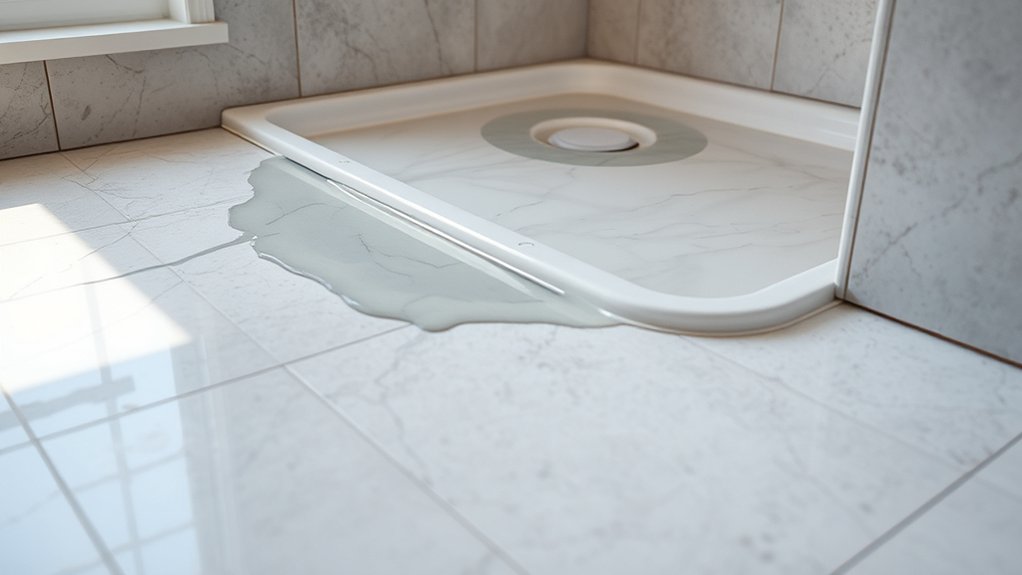
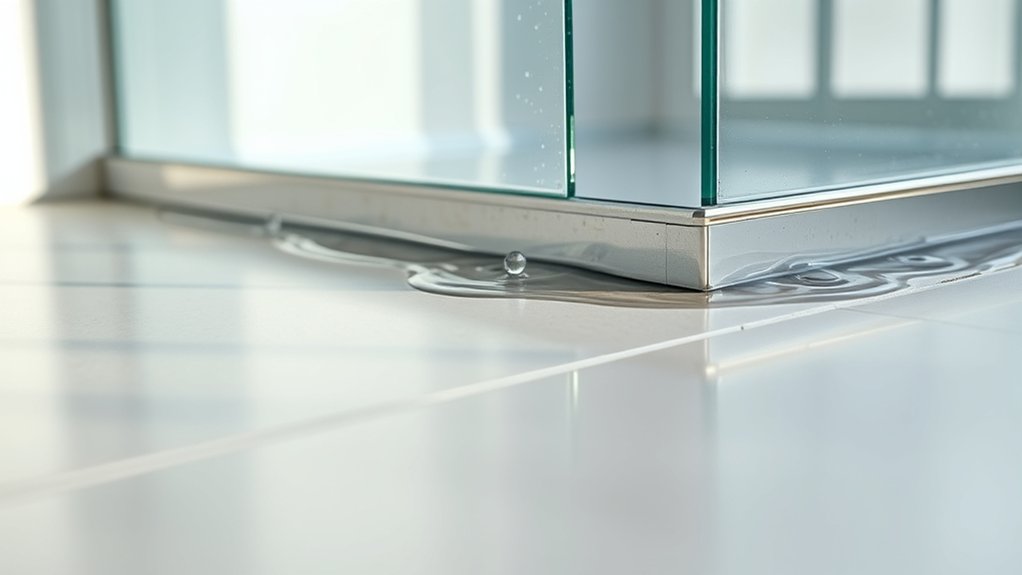
What causes a shower pan leak, and why should you care? A shower pan leak happens when water escapes the shower base due to cracks, poor installation, or worn-out seals.
This leak can seep beneath your bathroom floor, damaging subflooring and causing mold growth. Early leak detection is essential to prevent extensive home repair costs.
If you ignore signs like water stains or musty odors, damage worsens, increasing repair complexity. Understanding what a shower pan leak is helps you address the issue promptly, protecting your home’s structural integrity.
How Homeowners Insurance Covers Shower Pan Leaks
Detecting a shower pan leak early helps minimize damage, but handling repairs can still be costly. Your homeowners insurance may cover sudden water damage caused by a leak, but policies often exclude damage from long-term wear or neglect.
It’s important to understand what your policy covers and avoid confusing this with unrelated topics or irrelevant discussions about general water damage.
| Coverage Aspect | Typical Policy Stance | Notes |
|---|---|---|
| Sudden Leak Damage | Usually covered | Prompt reporting required |
| Gradual Leak Damage | Usually excluded | Consider maintenance claims |
| Mold from Leak | Often excluded | Separate mold insurance needed |
| Repairs to Pan | Generally excluded | Part of homeowner responsibility |
| Water Damage to Property | Often covered | Depends on cause and timing |
When Are Shower Pan Leaks Covered by Insurance?
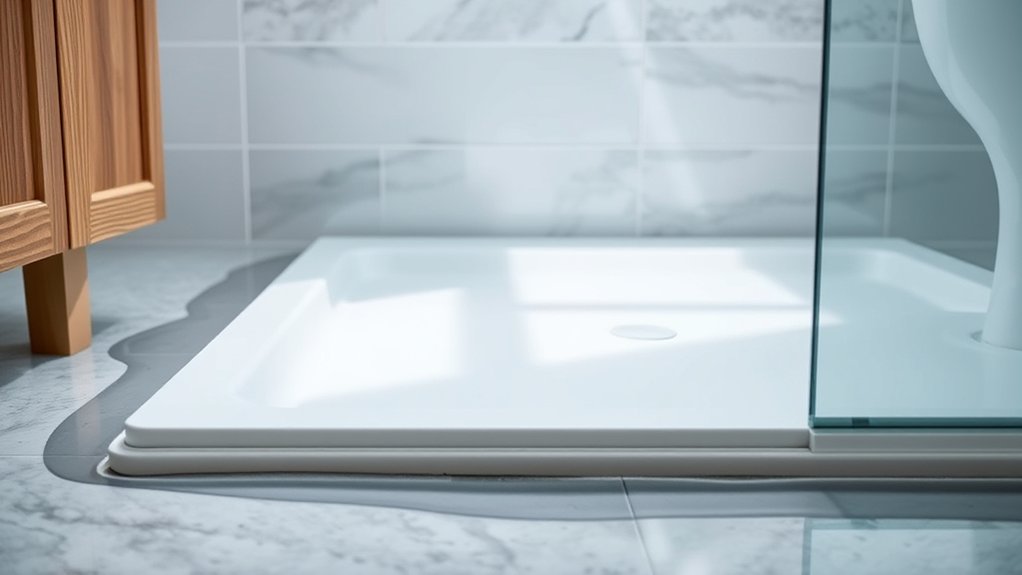
You’re covered for shower pan leaks when your policy includes water damage from sudden and accidental events. Make sure to document the damage thoroughly with photos and repair estimates to support your claim.
Understanding these criteria helps you know when your insurance will respond.
Policy Coverage Criteria
Under which circumstances do insurance policies cover shower pan leaks? Typically, coverage depends on whether the leak results from sudden, accidental damage rather than gradual wear or poor maintenance.
If your shower design includes advanced plumbing aesthetics that conceal pipes, insurers may require evidence that the leak was unexpected and not due to neglect. Policies often exclude damage from faulty workmanship or outdated materials, so leaks caused by improper installation usually aren’t covered.
Additionally, coverage varies if the leak leads to secondary damage, like water affecting floors or walls, which might be insured separately. Understanding your policy’s specific criteria is crucial, as insurers assess shower pan leaks based on cause, timing, and resulting damage, rather than the shower design or plumbing aesthetics alone.
Damage Documentation Requirements
Because insurance claims hinge on proof, you’ll need thorough documentation to show that your shower pan leak qualifies for coverage. Start by recording the date you noticed the leak and any visible damage caused. Take clear photos or videos of the affected areas before and after leak repair.
Obtain a detailed report from a licensed plumber confirming the leak’s cause, the repair process, and compliance with local plumbing codes. Keep all receipts and invoices related to repairs and assessments.
This documentation demonstrates that the leak resulted from covered events rather than neglect or improper installation. Meeting these requirements helps avoid claim denials and ensures your insurer can verify the legitimacy of your shower pan leak repair expenses. Accurate records are essential for a smooth insurance claim process.
What Usually Causes Shower Pan Leaks and Insurance Impact
What typically triggers shower pan leaks? Common causes include poor installation during home improvement, aging materials, and cracks in the pan or sealant. Water can seep through these faults, leading to damage beneath the shower floor.
Understanding these causes is essential since insurance coverage often depends on whether the leak results from sudden incidents or gradual wear and tear. Insurance policies usually exclude damage from neglect or maintenance issues, which means you might be responsible for repairs if the leak stems from long-term deterioration.
Knowing your consumer rights helps you navigate claims and determine if your policy covers the damage. Accurate identification of the cause supports your insurance case and guarantees you take appropriate action to protect your home investment.
What to Do Right After You Find a Shower Pan Leak
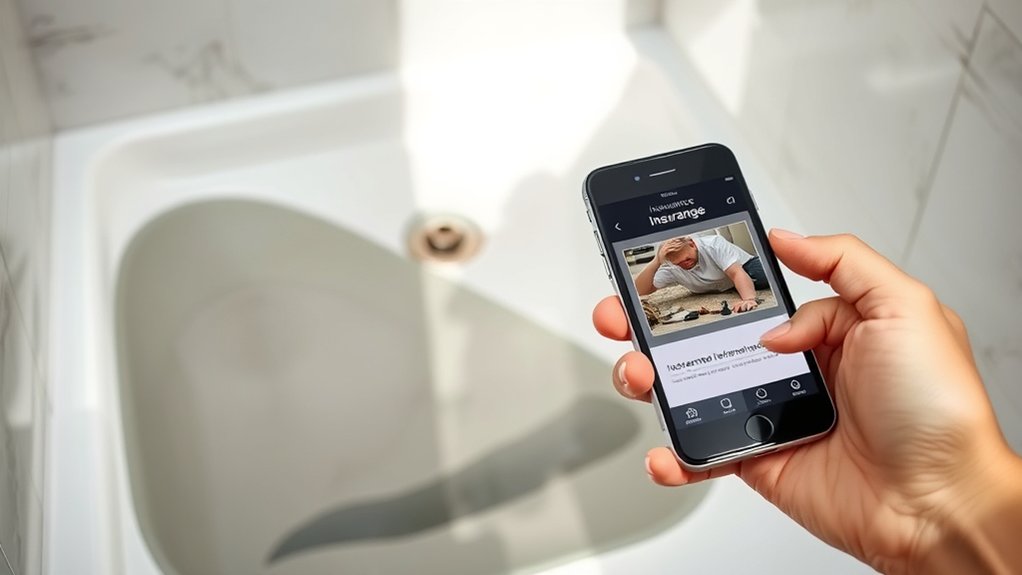
How should you respond immediately after discovering a shower pan leak? First, stop water use in the affected shower to prevent further damage.
Immediately stop using the shower to prevent additional water damage after discovering a shower pan leak.
Next, conduct a prompt leak detection to determine the leak’s source and extent. This step is crucial for effective repairs and insurance claims. Then, contact a professional plumber for assessment and repairs. Document initial findings but avoid extensive damage evaluation, which will be covered in the next steps.
Additionally, review your insurance policy to understand coverage limits and insurance deductibles that apply to such water damage. Acting quickly minimizes structural harm and controls repair costs, potentially reducing your out-of-pocket expenses related to insurance deductibles.
Prompt action also supports a smoother claims process if you decide to file with your insurer.
How to Document Shower Pan Damage for Your Insurance Claim
Accurately documenting shower pan damage is essential for supporting your insurance claim. Begin by taking clear photos and videos of the affected area, capturing any visible water stains, cracks, or mold growth. If you have a leak sensor installed, include its readings or alerts as part of your evidence.
Keep a detailed log of when you first noticed the damage and any repair attempts. Avoid exaggeration or falsifying information to prevent insurance fraud, which can nullify your claim.
To document your damage effectively:
- Photograph all visible damage from multiple angles
- Record leak sensor data and notifications
- Maintain dated notes on damage discovery and repairs
- Save receipts for any emergency fixes or inspections
- Contact your insurance adjuster promptly with your evidence
Why Regular Maintenance Can Save You Money on Repairs
You can save money by spotting leaks early before they cause extensive water damage. Regular maintenance helps prevent costly repairs and extends the lifespan of your shower pan.
Staying proactive reduces the risk of insurance claims and unexpected expenses.
Early Leak Detection Benefits
Regular maintenance plays a pivotal role in catching shower pan leaks early, preventing extensive damage and costly repairs. By staying proactive, you avoid expensive fixes and minimize disruption.
Ignoring early signs may lead to unrelated topics like mold or structural issues, complicating claims and increasing costs. New trends in leak detection, such as smart sensors, make monitoring easier and more efficient.
Key benefits include:
- Identifying leaks before they worsen
- Avoiding costly water damage repairs
- Extending the lifespan of your shower pan
- Simplifying insurance claims with documented maintenance
- Reducing health risks linked to mold growth
Preventing Water Damage Costs
Early detection of shower pan leaks not only prevents damage but also cuts down on costly repairs by addressing issues before they escalate. Regular maintenance, including inspection of shower design elements and bathtub accessories, helps you spot potential problems early.
This proactive approach reduces water damage costs and extends the usability of your bathroom fixtures.
| Maintenance Task | Frequency | Benefits |
|---|---|---|
| Inspect shower pan seals | Monthly | Prevents leaks |
| Check bathtub accessories | Quarterly | Ensures proper drainage |
| Clean drain and pipes | Biannually | Avoids blockages and backups |
| Review shower design | Annually | Identifies structural issues |
Extending Shower Pan Lifespan
How can consistent maintenance extend the lifespan of your shower pan and save you money? By following a regular maintenance scheduling routine, you catch small issues before they become costly repairs. Extending lifespan relies on proactive care rather than reactive fixes.
Simple actions prevent leaks and water damage, which insurance may not fully cover.
To extend your shower pan’s lifespan effectively, focus on:
- Inspecting the pan and surrounding grout for cracks or wear
- Cleaning drains regularly to avoid clogs
- Sealing edges and joints to prevent water seepage
- Checking for soft spots or sagging areas
- Scheduling professional inspections annually
This maintenance scheduling helps identify problems early, reducing repair costs and protecting your home’s structure.
What to Do If Your Insurance Denies Your Shower Pan Leak Claim
What steps should you take when your insurance denies your shower pan leak claim? First, review the denial letter carefully to understand the reasons. Gather all documentation, including repair estimates, photos of damage, and receipts for stain removal or mold remediation services.
Next, contact your insurance adjuster for clarification and ask if additional information might reverse the decision. If denied due to policy exclusions, consider appealing the decision by submitting a formal letter that includes supportive evidence.
You can also request a second opinion from a public adjuster or consult a legal professional to evaluate your case. Throughout the process, keep detailed records and stay organized, ensuring you address issues like mold remediation promptly to prevent further damage and potential health risks.
Frequently Asked Questions
Can a Leaking Shower Pan Cause Mold Growth?
Yes, a leaking shower pan can cause mold growth. If you don’t address leak detection promptly, the moisture increases mold risk, which can damage your home and impact indoor air quality.
Act quickly to prevent issues.
How Long Does It Take to Repair a Shower Pan Leak?
You’ll typically repair a shower pan leak within one to three days. Check your shower pan warranties and insurance coverage nuances, as some policies might cover related damages, while others exclude water seepage repairs or require specific conditions.
Are Shower Pan Leaks Common in Older Homes?
Think of shower maintenance like tuning an old car. Neglect leads to leaks. Shower pan leaks are common in older homes due to wear.
While insurance coverage varies, routine upkeep helps prevent costly damage and claims.
Can I File a Claim for a Slow, Undetected Shower Pan Leak?
You can file a claim for a slow, undetected shower pan leak, but claim coverage depends on your policy and insurance limits.
Review your policy carefully, as some exclude gradual damage or require timely reporting for coverage.
Do Plumbers Offer Warranties on Shower Pan Leak Repairs?
Yes, many plumbers offer warranty options on shower pan leak repairs. You should ask about their specific coverage and duration.
Keep in mind, insurance coverage typically doesn’t affect these warranties, so clarify both before proceeding.