How Do You Paint Kitchen Countertops
Did you know that over 60% of homeowners choose to refresh their kitchen countertops instead of replacing them? Painting kitchen countertops is a cost-effective way to update your space and can deliver impressive results with the right technique.
However, achieving a durable finish requires precise preparation, careful priming, and proper sealing. Understanding these critical steps is essential before you start your project.
By following the correct process, you can transform your countertops and give your kitchen a fresh, new look without the expense of replacement.
Materials and Tools Needed for Painting Kitchen Countertops
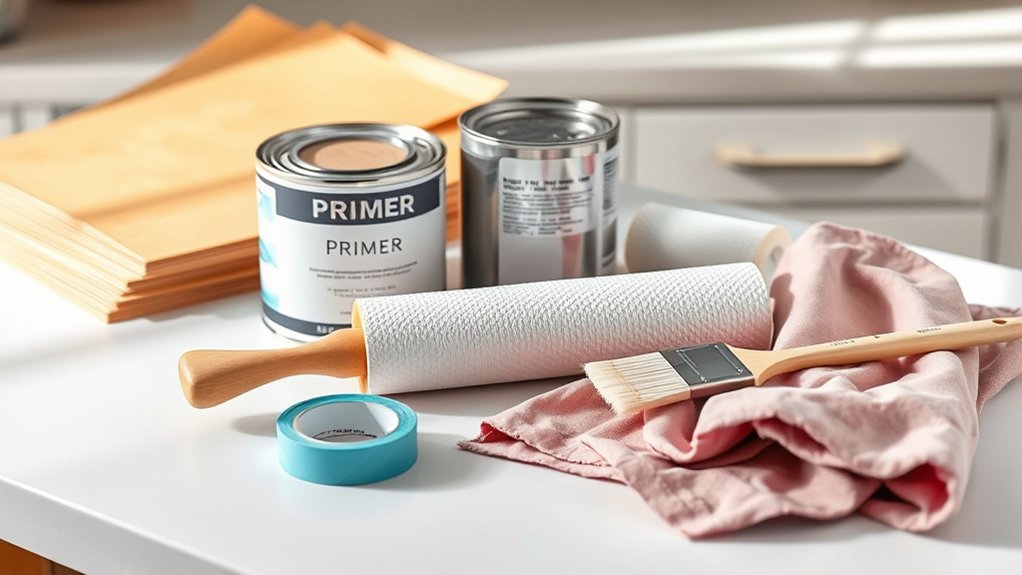
What exactly do you need to successfully paint your kitchen countertops? Start with a high-quality, durable finish designed specifically for countertops to ensure long-lasting wear resistance. Choose a paint that offers excellent color compatibility with your kitchen’s aesthetic, preventing fading or discoloration over time.
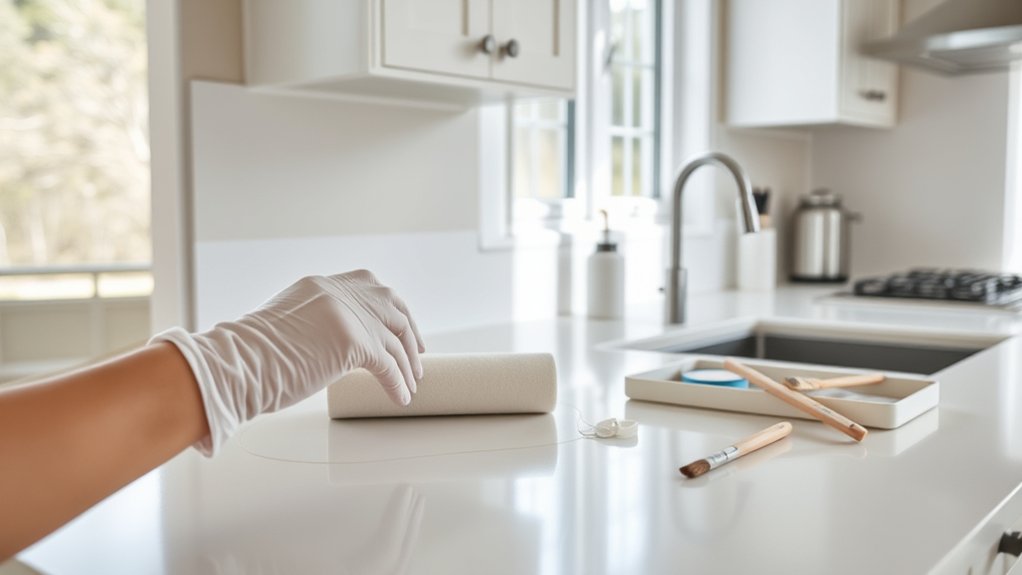
You’ll require a reliable primer formulated for non-porous surfaces to promote adhesion and prevent peeling. Equip yourself with fine-grit sandpaper or a sanding block to create a smooth surface for paint application. Use a high-density foam roller for even coverage and a synthetic bristle brush for edges and corners.
Have painter’s tape on hand for precise masking and a clean finish. Cleaners and degreasers are essential to remove contaminants before painting. Finally, protective gloves and a respirator mask ensure safety when working with chemicals and fumes.
Selecting these materials and tools with attention to durability and color compatibility guarantees a professional, lasting result.
How to Prepare Your Countertops for Painting
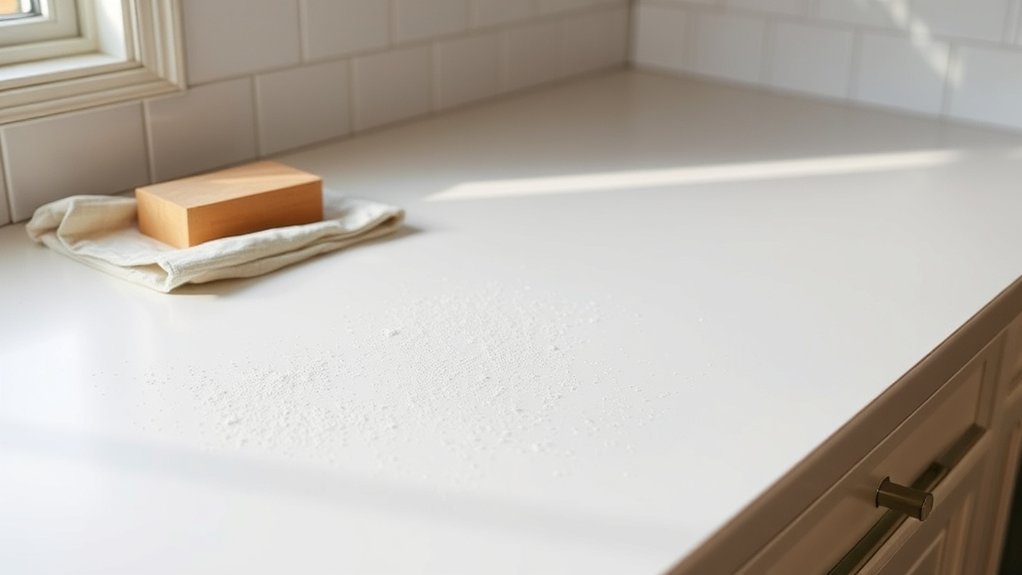
Before applying any paint, you must thoroughly prepare your countertops to ensure peak adhesion and durability. Start by cleaning the surface with a degreaser to remove oils, dirt, and residues. Next, sand the entire countertop using medium-grit sandpaper to create a rough texture for better primer bonding. When you’re done, wipe away dust with a damp cloth.
How to choose primer is critical: select a high-quality bonding primer specifically designed for laminate or glossy surfaces. This type of primer ensures paint adheres firmly to non-porous countertops. Apply it evenly, paying close attention to the edges. How to prep edges involves sanding them carefully to remove any imperfections and ensure a smooth transition between countertop and backsplash or cabinetry. Mask these edges with painter’s tape to prevent paint bleed. Proper preparation here prevents peeling and chipping, extending your countertop’s painted finish lifespan and delivering professional results.
Step-by-Step Guide to Painting Kitchen Countertops
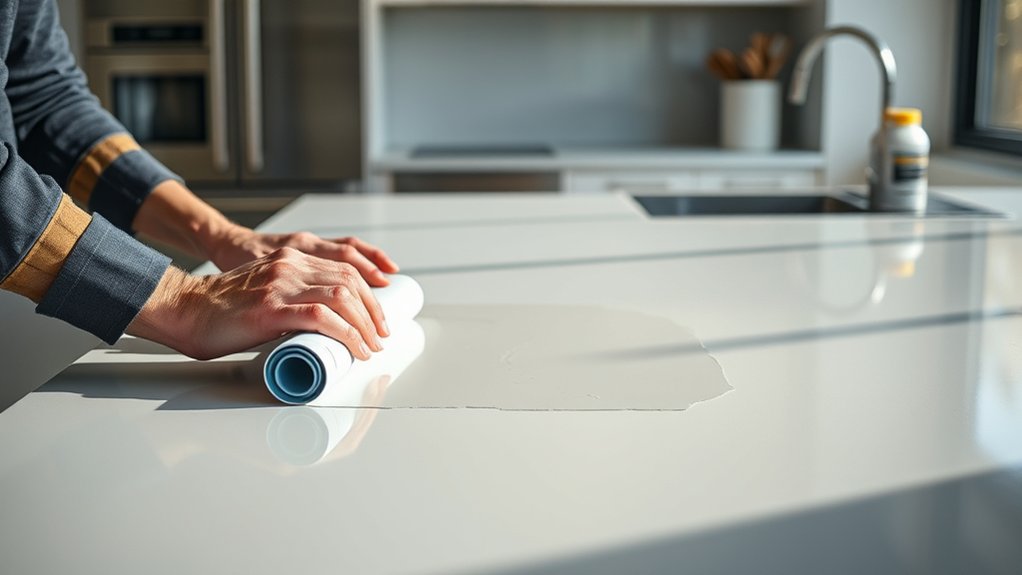
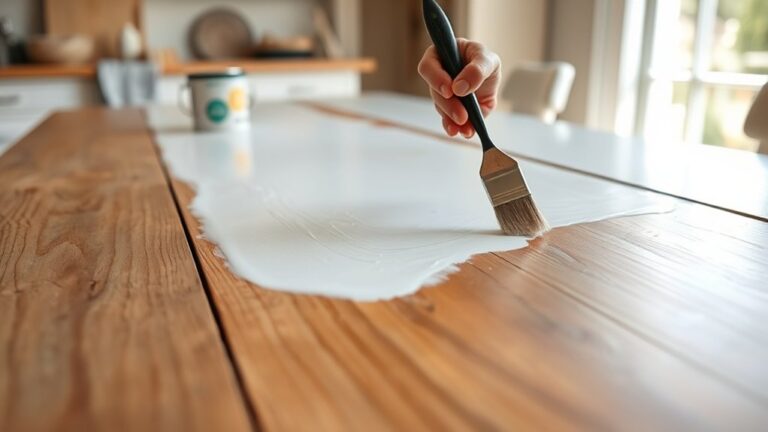
How exactly should you apply paint to guarantee a flawless, durable finish on your kitchen countertops? Begin by selecting a high-quality primer compatible with your countertop material. Apply a thin, even coat using a synthetic brush or roller, focusing on full coverage without drips. Let it dry completely.
Next, employ idea1 by applying the first layer of paint with long, consistent strokes to minimize brush marks. Allow adequate drying time before lightly sanding with fine-grit sandpaper to smooth imperfections. Wipe away dust thoroughly.
Now, execute idea2 by applying a second, thin coat of paint, ensuring uniform coverage. Avoid heavy layers to prevent cracking. Maintain a well-ventilated environment to facilitate curing.
Each step demands patience and precision to optimize adhesion and durability. This methodical approach ensures your painted countertops look professional and withstand daily use effectively.
Sealing Painted Countertops to Keep Them Durable
Why does sealing painted countertops matter for their longevity? Sealing is essential because it enhances the durability of your paint job, protecting it from daily wear, moisture, and stains. Without a proper sealant, painted surfaces are prone to chipping, peeling, and discoloration.
To guarantee maximum sealing durability, apply a high-quality polyurethane or epoxy-based sealant specifically designed for countertops. These sealants create a robust barrier that resists heat, scratches, and water penetration.
When applying, use thin, even coats and allow adequate drying time between layers to avoid bubbles or uneven textures. Besides protection, sealing also imparts a professional glossy finish that elevates your countertop’s appearance, making it look sleek and polished.
Tips to Maintain and Refresh Painted Kitchen Countertops
Proper sealing lays the foundation for durability, but maintaining and refreshing your painted kitchen countertops ensures they stay pristine over time. To preserve the finish, clean surfaces gently with pH-neutral cleaners and avoid abrasive scrubbing pads that can damage the paint layer.
Promptly wipe spills to prevent staining and deterioration. When signs of wear appear, consider light sanding followed by applying a fresh coat of paint aligned with new color trends to modernize your kitchen’s look. This approach offers budget friendly upgrades without the cost of full replacement.
Additionally, reapplying a clear protective topcoat periodically reinforces the surface resistance to scratches and moisture. By adhering to these maintenance protocols, you sustain both the functionality and aesthetic appeal of your countertops. Staying proactive with upkeep not only extends the lifespan of your painted counters but also allows you to adapt to evolving design preferences efficiently and economically.
Frequently Asked Questions
How Long Does Painted Countertop Paint Typically Last?
Think of painted countertops like a shield in battle: they typically last 5-10 years with proper care. Choosing eco-friendly paint options guarantees durability and safety, extending how long painted countertop lasts while minimizing environmental impact.
Can I Paint Over Laminate Countertops?
Yes, you can paint over laminate countertops by ensuring laminate viability through thorough cleaning and sanding.
Use eco-friendly paints with strong adhesion properties to achieve durable, chemical-resistant finishes suitable for kitchen environments.
Is Painting Countertops a Cost-Effective Alternative to Replacement?
Yes, painting countertops offers a cost-effective alternative to replacement. You’ll enhance countertops aesthetics at a fraction of the price, making it a smart choice in cost comparison.
This is especially true when budget constraints limit full renovations.
Are There Eco-Friendly Paints Suitable for Kitchen Countertops?
Looking for eco-friendly countertop paints? You’ll find low-VOC, water-based options designed for durability and safety in kitchens.
Don’t you want a sustainable choice that resists stains and heat while protecting your environment?
How Do Painted Countertops Affect Home Resale Value?
You’ll find painted countertops can negatively affect home resale impact if buyers prefer original surfaces. However, aligning with countertop marketplace trends, using durable, high-quality finishes may mitigate this, appealing to budget-conscious or style-focused buyers.